Have you ever heard someone say, “She’s a travel vlogger,” or “He’s become a full-time vlogger,” and wondered what they actually meant? You’re not alone. The word vlogger meaning is searched by thousands of people every month because it’s become a huge part of today’s online culture.
Whether you’re scrolling through YouTube, TikTok, Instagram, or Facebook, chances are you’ve watched a vlog without even realizing it. From daily life updates and travel adventures to gaming sessions and cooking tutorials, vloggers have transformed how people create and consume content online.
In this guide, you’ll discover exactly what vlogger means, where the term came from, how it’s used across different platforms, common misconceptions, and plenty of real-life examples. Whether you’re a student, parent, creator, or simply curious about internet vocabulary, this updated 2026 guide will answer every question you have.
What Does “Vlogger” Mean?
Quick Answer:
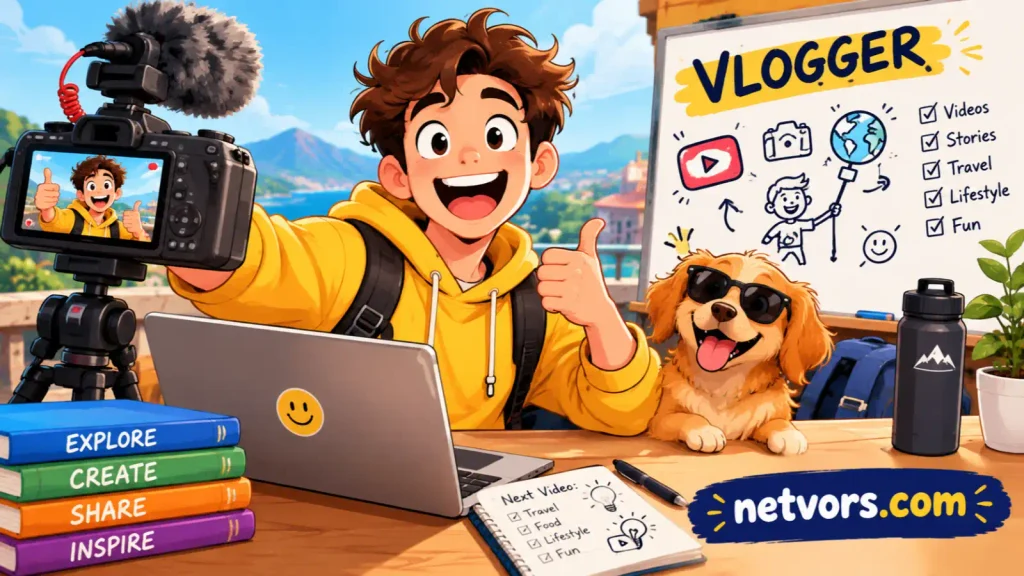
A vlogger is a person who creates and shares video blogs (called vlogs) online. Instead of writing articles, vloggers communicate through videos about their daily life, hobbies, opinions, travel, education, gaming, technology, beauty, and countless other topics.
The word vlogger combines two words:
- Video
- Blogger
A blogger writes content in text form, while a vlogger records videos to share information, stories, or entertainment.
Today, millions of people around the world identify as vloggers, ranging from casual creators filming with smartphones to professional influencers producing high-quality videos.
Origin of the Word
The term vlog became popular in the early 2000s, shortly after personal blogging exploded on the internet.
As video-sharing websites evolved—especially YouTube after its launch in 2005—more creators began documenting their lives through videos rather than written posts. Naturally, people started calling these creators vloggers.
Over the years, the meaning expanded beyond YouTube. Today, someone who regularly shares video-based content on TikTok, Instagram, Facebook, or other platforms may also be described as a vlogger.
How the Meaning Has Changed
Originally, vloggers mainly filmed:
- Daily routines
- Personal diaries
- Travel experiences
Today, vloggers create videos about almost everything, including:
- Technology
- Fashion
- Food
- Education
- Finance
- Gaming
- Fitness
- Parenting
- Business
- Lifestyle
Being a vlogger is now considered a career for many creators who earn income through advertising, sponsorships, memberships, and merchandise.
Pronunciation
Vlogger
Pronounced:
Vlog-ger
/VLOG-er/
The “vlog” sounds exactly like the word “blog,” except it starts with a “V.”
How to Use “Vlogger” Correctly in Texts & Chat

Unlike internet abbreviations such as LOL or BRB, vlogger is a full word rather than an acronym. It’s commonly used when talking about content creators who mainly produce video blogs.
Casual Conversations
You might say:
- “She’s becoming a travel vlogger.”
- “I follow several cooking vloggers.”
- “He wants to be a gaming vlogger.”
The tone is casual and descriptive.
Social Media Usage
The word appears naturally across many platforms.
YouTube
“One of my favorite vloggers uploaded a new travel video.”
“This fashion vlogger always recommends affordable outfits.”
TikTok
“That lifestyle vlogger has amazing editing skills.”
“My cousin recently started her own vlogging channel.”
Discord
“Anyone here watch gaming vloggers?”
“I’m looking for honest tech vloggers.”
When NOT to Use It
Avoid using vlogger when referring to creators who don’t make video blogs.
For example:
❌ “The newspaper journalist is a vlogger.”
❌ “The novelist is a vlogger.”
Instead, use terms like:
- Journalist
- Blogger
- Writer
- Reporter
- Content creator (if appropriate)
Professional Settings
The word itself is acceptable in professional conversations, especially in marketing, digital media, journalism, and social media management.
Example:
“Our company collaborated with several travel vloggers to promote the destination.”
Capitalization
Use lowercase in most sentences.
✔ She’s a popular vlogger.
Only capitalize when it starts a sentence or appears in a title.
Emoji Pairings
People often pair the word with emojis like:
📹 🎥 📷 🎬 ✈️ 🍔 🎮 💄 🌍
Examples:
“I’m following a new travel vlogger 🌍”
“She’s my favorite food vlogger 🍜”
Real Conversation Examples Using “Vlogger”
Between Friends
Alex: Have you seen Emma lately?
Ryan: Yeah! She’s become a travel vlogger and keeps posting videos from Japan.
Meaning: Ryan is explaining that Emma now creates travel-related video content.
Dating Conversation
Emma: What does your brother do?
Jake: He’s a fitness vlogger on YouTube.
Emma: That’s pretty cool!
Meaning: Jake is describing his brother’s profession as someone who produces fitness videos.
Family Chat
Mom: Why is your cousin always filming everything?
Daughter: She’s trying to become a lifestyle vlogger.
Mom: That makes sense now.
Meaning: The daughter explains why her cousin records daily activities.
Workplace Conversation
Manager: We need someone to promote our new product.
Marketing Lead: Let’s collaborate with a tech vlogger.
Meaning: They’re looking for a creator whose audience is interested in technology.
Gaming Community
Player 1: Who’s your favorite Minecraft creator?
Player 2: I usually watch gaming vloggers who explain new updates.
Meaning: The speaker enjoys video creators focused on gaming content.
Why People Use the Word
Calling someone a vlogger immediately tells others that the person creates video-based content rather than written articles. It’s a quick, widely understood term that works across almost every social media platform.
Common Mistakes & Misunderstandings
Even though the word vlogger is now common, many people still confuse it with similar internet terms. Here are the mistakes you’ll see most often.
1. Thinking Every YouTuber Is a Vlogger
This is probably the biggest misconception.
Not every YouTuber is a vlogger.
For example:
- A person who uploads coding tutorials is an educator.
- Someone who posts animated videos is an animator.
- A channel that reviews smartphones is a tech reviewer.
- A creator who mainly records their daily life is a vlogger.
A vlogger usually shares experiences, routines, or personal stories through video.
2. Confusing a Blogger with a Vlogger
Although the words look similar, they aren’t the same.
| Blogger | Vlogger |
|---|---|
| Creates written articles | Creates video content |
| Publishes blog posts | Publishes vlogs (video blogs) |
| Mostly text-based | Mostly video-based |
| Website or blog | YouTube, TikTok, Instagram, Facebook, and other video platforms |
Some creators are both bloggers and vloggers because they write articles and make videos about the same topic.
3. Assuming Vloggers Only Make Daily Vlogs
Years ago, daily life videos were the most popular type of vlog.
Today, vloggers create videos about almost every niche imaginable, including:
- Travel
- Food
- Technology
- Cars
- Finance
- Fashion
- Beauty
- Fitness
- Business
- Education
- DIY projects
- Gaming
The format is much broader than it used to be.
Generational Misunderstandings
Different age groups often use the word differently.
Gen Z
Gen Z generally sees a vlogger as any creator who shares authentic, personality-driven video content. The platform doesn’t matter as much as the style.
Millennials
Many Millennials still associate the word with YouTube because that’s where vlogging became mainstream.
Older Generations
Some older adults use vlogger, YouTuber, influencer, and content creator interchangeably, even though they have different meanings.
Cultural & Regional Differences
The meaning of vlogger stays largely the same around the world, but popular content categories vary.
For example:
- Travel vloggers are especially popular in Southeast Asia.
- Food vloggers have huge audiences across South Asia.
- Lifestyle and family vloggers dominate many Western markets.
- Gaming vloggers attract viewers worldwide.
Regardless of location, a vlogger is simply someone who shares stories or information primarily through video.
What If Someone Doesn’t Understand the Word?
The easiest explanation is:
“A vlogger is someone who makes video blogs instead of writing blog posts.”
Most people immediately understand once they hear that comparison.
“Vlogger” Across Different Platforms & Demographics
The word vlogger is used almost everywhere online, but its meaning can shift slightly depending on the platform and audience.
YouTube
YouTube remains the platform most closely associated with vlogging.
Popular categories include:
- Daily life
- Travel
- Technology
- Beauty
- Food
- Education
- Family
- Fitness
When someone says, “I’m a vlogger,” many people still picture a YouTube creator first.
TikTok
Short-form videos have changed what people consider a vlog.
On TikTok, creators often make:
- Day-in-my-life videos
- Morning routines
- Study sessions
- Travel clips
- Behind-the-scenes content
These short videos are often described as mini vlogs.
Instagram vloggers usually combine:
- Reels
- Stories
- Photo posts
- Live videos
Lifestyle, fashion, travel, and fitness creators frequently refer to themselves as vloggers or content creators.
Facebook vloggers often focus on:
- Family life
- Cooking
- Local travel
- DIY projects
- Community events
Long-form videos continue to perform well for many audiences.
Discord & Reddit
People rarely call themselves vloggers in conversations on Discord or Reddit. Instead, users discuss:
- Favorite vloggers
- Camera equipment
- Editing software
- YouTube growth
- Content ideas
These communities are more focused on learning and sharing experiences.
How Different Generations Use the Term
Gen Z
- Uses the word naturally.
- May also prefer “creator” or “content creator.”
- Doesn’t limit vlogging to YouTube.
Millennials
- Commonly associate vlogging with YouTube.
- Frequently follow travel, parenting, and tech vloggers.
Gen X & Baby Boomers
Older users recognize the term but may simply say “YouTube creator” instead.
Is “Vlogger” Formal or Informal?
The word itself is neutral.
It’s perfectly acceptable in:
- Business meetings
- Marketing reports
- News articles
- Academic discussions about social media
- Everyday conversations
Unlike internet abbreviations such as LOL or IMO, vlogger isn’t considered slang.
Is It Safe for Work?
Yes.
The word is completely safe for professional and educational settings.
The content created by a vlogger may vary, but the term itself is appropriate in virtually any context.
Related Slang, Terms & Alternatives
If you’re learning internet vocabulary, these related terms are worth knowing too.
| Term | Meaning |
|---|---|
| Blogger | Someone who writes articles on a website or blog. |
| Content Creator | A broad term for anyone who creates digital content. |
| Influencer | A creator who influences purchasing decisions or opinions through an audience. |
| YouTuber | Someone who primarily creates content for YouTube. |
| Streamer | A creator who broadcasts live videos on platforms like Twitch or YouTube Live. |
| Podcaster | Someone who creates audio or video podcast episodes. |
| Creator Economy | The industry built around independent online creators earning income. |
| Video Blog (Vlog) | A blog presented in video format instead of text. |
| Subscriber | A person who follows a creator’s channel. |
| Follower | Someone who follows a creator on social media platforms. |
Similar Words
- Video creator
- Online creator
- Digital creator
- Media creator
- Lifestyle creator
Opposite or Related Concepts
There isn’t a true antonym for vlogger, but these represent different forms of content creation:
- Traditional journalist
- Newspaper columnist
- Print author
- Academic writer
If you’re building a glossary of internet terms, you could also create articles around:
- Learn more about blogger meaning
- Learn more about content creator meaning
- Learn more about influencer meaning
- Learn more about YouTuber meaning
- Learn more about streamer meaning
FAQs:
What does vlogger mean in simple words?
A vlogger is someone who creates and shares video blogs online. Instead of writing articles, they use videos to tell stories, teach skills, entertain viewers, or document everyday life.
Is a vlogger the same as a YouTuber?
Not always. A YouTuber is anyone who uploads videos to YouTube, while a vlogger specifically creates vlog-style videos. Some YouTubers are vloggers, but many produce tutorials, reviews, animations, or educational content instead.
What is the difference between a blogger and a vlogger?
A blogger primarily communicates through written articles, while a vlogger shares information through videos. Both may cover similar topics, but they use different formats to reach their audiences.
Can anyone become a vlogger?
Yes. Anyone with a smartphone or camera can start creating vlogs. Consistency, creativity, and engaging storytelling are usually more important than having expensive equipment when you’re getting started.
Do vloggers earn money?
Many do. Depending on their audience and platform, vloggers can earn income through advertising, sponsorships, affiliate marketing, memberships, merchandise, and brand collaborations. However, earnings vary widely based on content quality, niche, and audience size.
Conclusion:
The vlogger meaning is simple: it’s someone who shares stories, experiences, or information through video blogs rather than written posts. As online video continues to grow, vloggers play an increasingly important role in entertainment, education, and digital communication.
Whether you’re watching travel adventures, cooking tutorials, gaming sessions, or day-in-the-life videos, you’ve almost certainly enjoyed content created by a vlogger. Understanding the term also makes it easier to follow conversations about social media, influencers, and online creators.
Now that you know what a vlogger is, you’ll spot the term everywhere—from YouTube recommendations to Instagram bios and TikTok captions. And if you’re thinking about starting your own channel, who knows? You might become the next successful vlogger.

Hi, I’m John Cate, the voice behind Netvors.com, where I turn confusing words into clear meaning.
I’ve always been fascinated by how language evolves. One day a word means one thing, the next day it means something completely different, especially online. That shift is exactly what inspired me to build Netvors: a space where meanings are simple, accurate, and actually useful.