
Have you ever heard someone say, “Let’s carpool tomorrow,” and wondered what they meant? Or maybe you’ve seen the word carpool in a school email, office chat, or community group. While it’s a common English term, many learners and non-native speakers still ask about the carpool meaning and how to use it correctly.
Simply put, carpooling is when two or more people travel together in the same car to reach a shared destination. It helps save money, reduces traffic, and is better for the environment. Whether you’re commuting to work, taking children to school, or heading to an event with friends, carpooling has become an everyday part of modern life.
In this updated 2026 guide, you’ll learn the complete carpool meaning, its origin, pronunciation, examples, synonyms, and practical usage in simple English. You’ll also discover when to use the word naturally in conversations and avoid common mistakes that many English learners make.
What Does “Carpool” Mean?
Quick Answer: Carpool means sharing one car with other people who are traveling to the same place. Instead of everyone driving separately, one vehicle carries multiple passengers, helping everyone save time, fuel, and money.
The word carpool refers to an arrangement where several people take turns driving or ride together in a single vehicle. This practice is common among coworkers, students, neighbors, and families who have similar travel routes.
Simple Definition
Carpool (noun):
A group of people who regularly travel together in one car to the same destination.
Carpool (verb):
To travel together in one car instead of driving separately.
Pronunciation
Carpool: /ˈkɑːr.puːl/
Easy pronunciation: KAR-pool
The first syllable sounds like car, and the second sounds like pool.
Origin of the Word “Carpool”
The word carpool appeared in the United States during the mid-20th century. It combines two simple English words:
- Car = an automobile
- Pool = a shared resource or group
Originally, the idea of pooling resources meant sharing something for everyone’s benefit. During World War II, governments encouraged people to share rides to save fuel and reduce unnecessary driving. Over time, the practice became known as carpooling.
Today, the term is widely used across North America and has become common in many English-speaking countries. Modern navigation apps and workplace commuting programs have made carpooling even more popular.
How the Meaning Has Evolved
Years ago, carpooling mainly referred to coworkers sharing rides to work.
Today, the meaning has expanded to include:
- Parents sharing school drop-offs
- College students traveling together
- Friends attending concerts or sporting events
- Airport rides
- Community ride-sharing groups
- Environmentally friendly commuting
Although technology has introduced ride-sharing services, carpool still specifically means people sharing a trip because they are already traveling in the same direction—not hiring a driver.
How to Use “Carpool” Correctly in Texts & Conversations
Using carpool is straightforward once you know whether it’s acting as a noun or a verb.
As a Noun
A carpool is the group of people sharing the ride.
Examples:
- We joined a carpool for work.
- Our office started a morning carpool.
- The school organized a parent carpool.
As a Verb
To carpool means traveling together in one vehicle.
Examples:
- We carpool every Monday.
- Do you want to carpool tomorrow?
- They decided to carpool to the airport.
Common Situations Where People Use “Carpool”

At Work
Employees often carpool to reduce commuting costs.
Example
Emma: “Gas prices keep increasing.”
David: “Let’s carpool starting next week.”
At School
Parents often organize carpools to take children to school or after-school activities.
Example
“We’re part of the neighborhood school carpool.”
With Friends
Friends frequently carpool when attending concerts, weddings, or road trips.
Example
“Instead of driving three cars, let’s carpool.”
During Events
Large events often encourage visitors to carpool because parking spaces are limited.
Example
“The festival recommends that guests carpool whenever possible.”
Where You’ll Commonly See the Word
SMS & Text Messages
- Want to carpool tomorrow?
- I’ll pick everyone up at 8.
- Thanks for the carpool today!
Neighborhood and office groups often arrange carpools through WhatsApp.
Example:
“Anyone interested in a carpool to the conference?”
People may write:
- Weekend carpool 🚗
- Carpool vibes
- Road trip crew
Facebook Groups
Community groups frequently post:
“Looking for a morning carpool from downtown.”
Users discuss:
- Best carpool routes
- Daily commuting tips
- Fuel-sharing arrangements
Workplace Chat Apps
Messages like these are common:
“Anyone available to carpool to tomorrow’s client meeting?”
When NOT to Use “Carpool”
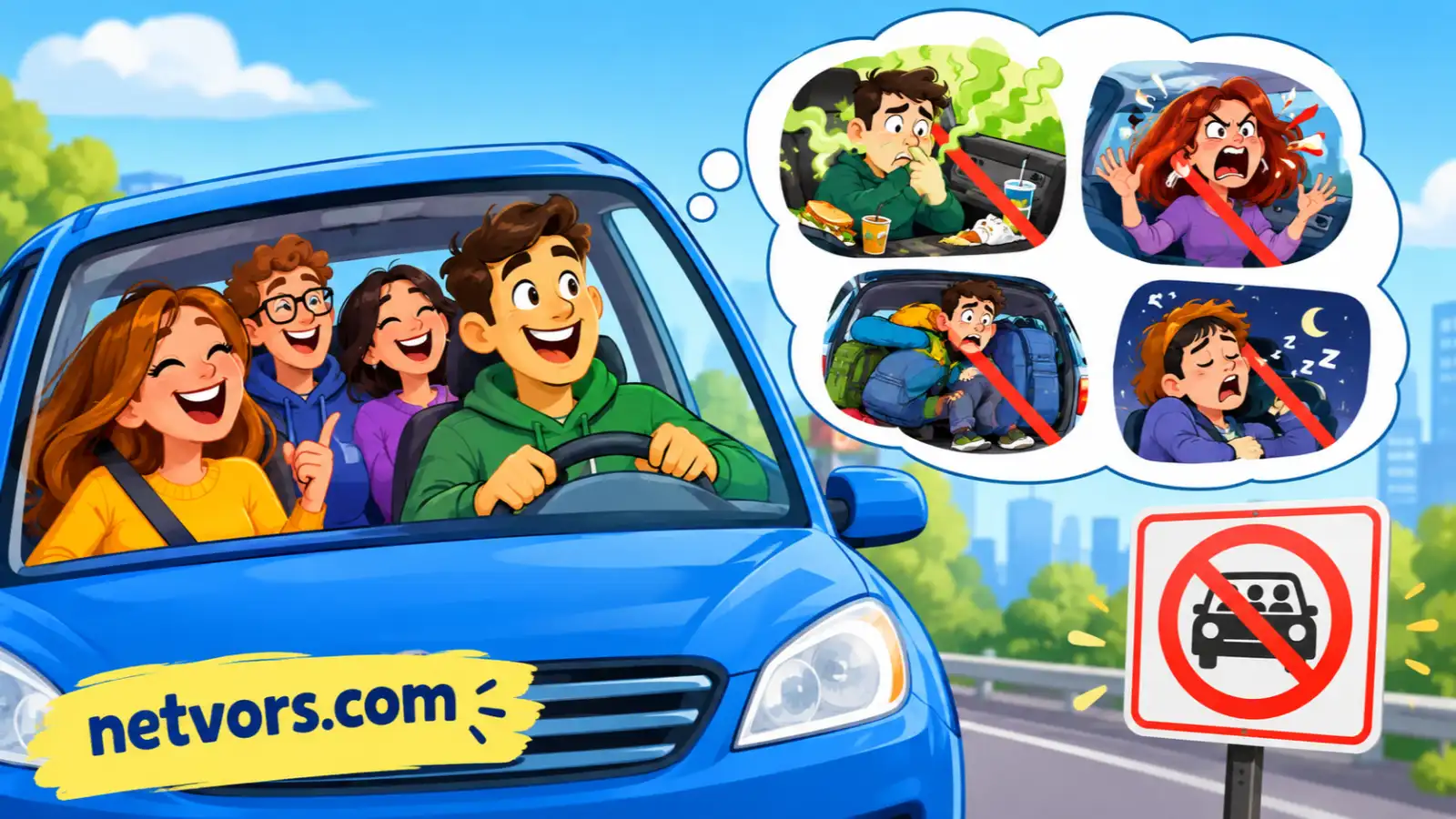
Although carpool is a common English word, it isn’t suitable in every situation.
Avoid using it when referring to:
- Taxi services
- Uber or Lyft rides
- Hiring a chauffeur
- Public buses
- Trains
- Individual driving
For example:
❌ “I carpooled with an Uber driver.”
✅ “I shared an Uber with my friend.”
Carpooling usually means people voluntarily share one private vehicle because they have similar destinations.
Formatting Tips
The word is almost always written as:
✅ carpool
Avoid:
- Car Pool
- Car-pool
- CARPOOL (unless using all caps for emphasis)
When texting, people often pair it with emojis such as:
🚗
⛽
😊
🌍
♻️
Example:
“Who’s up for a carpool tomorrow? 🚗♻️”
Real Conversation Examples Using “Carpool”
Example 1: Between Friends
Alex: Are you driving to the game?
Chris: Yeah. Want to carpool?
Alex: Definitely. It’ll save us parking fees.
Meaning: The speakers are sharing one vehicle to save money and make the trip easier.
Example 2: Office Chat
Sarah: Is anyone coming from downtown?
Mike: I am. We can carpool if you’d like.
Sarah: Perfect! Thanks.
Meaning: Coworkers coordinate transportation for convenience and lower commuting costs.
Example 3: Family Conversation
Mom: Emily’s soccer practice starts at five.
Dad: I’ll ask the neighbors if we can join their carpool.
Meaning: Parents organize shared transportation for children’s activities.
Example 4: College Students
Jake: Parking permits are expensive.
Ryan: Let’s carpool this semester.
Jake: Great idea.
Meaning: Students reduce transportation expenses by sharing rides.
Example 5: Weekend Road Trip
Sophia: Are we taking separate cars?
Liam: No, let’s carpool. It’ll make the trip more fun.
Sophia: Sounds good!
Meaning: Friends choose to travel together for convenience, lower fuel costs, and a more enjoyable journey.Common Mistakes & Misunderstandings
Even though carpool is an everyday English word, it’s easy to confuse with other transportation terms. Here are the most common mistakes and how to avoid them.
1. Confusing Carpool with Ride-Sharing Apps
Many people think carpooling means booking a ride through apps like Uber or Lyft. While some ride-sharing services offer carpool options, the traditional meaning is different.
Incorrect: “I carpooled with my Uber driver.”
Correct: “I shared an Uber with another passenger.”
or
“We carpooled to work.”
Why it matters: Carpooling usually involves people who already know each other—or who have the same destination—sharing a private vehicle.
2. Thinking Only One Person Benefits
Some assume the driver is doing everyone a favor without gaining anything.
In reality, everyone benefits from a carpool because it can:
- Split fuel costs
- Reduce vehicle wear and tear
- Save on parking fees
- Make long commutes more enjoyable
- Lower carbon emissions
3. Using “Carpool” for Any Shared Transportation
Not every shared ride is a carpool.
These are not usually considered carpools:
- Public buses
- Trains
- Taxis
- Airport shuttles
- Chartered buses
A carpool specifically involves people sharing one private car for a common journey.
Generational Differences
Different age groups may use or understand the word differently.
Gen Z
Many Gen Z users are familiar with carpooling through:
- School activities
- College commutes
- Group road trips
- Social media discussions about sustainable living
However, they may also associate the word with ride-sharing apps because of modern transportation services.
Millennials
Millennials commonly use carpool for:
- Daily work commutes
- Parenting responsibilities
- Weekend travel
- Community events
Many workplaces encourage employees to form carpools to reduce commuting costs.
Older Generations
Older adults often remember carpooling as a neighborhood activity where coworkers or parents took turns driving.
For them, the word is strongly associated with community cooperation rather than technology.
Cultural & Regional Differences
Although the meaning stays largely the same, usage varies by country.
United States
The word carpool is extremely common.
You’ll hear it in schools, offices, and local government transportation programs.
Canada
Canadians also use carpool, especially for commuting during winter months or traveling long distances.
United Kingdom
People often understand the word, but car sharing is used more frequently in everyday conversation.
Australia & New Zealand
Both carpool and car sharing are widely understood, depending on the region and context.
Non-Native English Speakers
English learners sometimes confuse carpool with:
- Car rental
- Car sharing services
- Ride-hailing
- Public transportation
Understanding the distinction helps you sound more natural in conversations.
How to Clarify the Meaning
If someone doesn’t understand the word, explain it simply.
For example:
“Carpool means several people travel together in one private car because they’re going to the same place.”
A simple explanation like this avoids confusion and works well in both casual and educational settings.
Carpool Across Different Platforms & Demographics
Although carpool isn’t internet slang, it’s widely used across digital platforms where people coordinate travel.
Families, coworkers, and neighbors often use WhatsApp groups to organize daily rides.
Example:
“Who can join tomorrow’s school carpool?”
Community groups frequently post requests like:
- Looking for a carpool to work.
- Anyone driving to the concert?
- School carpool available.
Reddit communities often discuss:
- Best commuting routes
- Fuel-sharing tips
- Carpool etiquette
- Long-distance commuting
Discord
Gaming communities don’t use the word often, but local meetup servers sometimes organize carpools for gaming events or conventions.
People usually use carpool in captions instead of conversations.
Examples:
- Carpool crew 🚗
- Weekend carpool.
- Road trip with the best people.
TikTok
On TikTok, creators often mention carpooling in videos about:
- Saving money
- Sustainable living
- College life
- Daily routines
- Productivity
Is “Carpool” Formal or Informal?
One of the nice things about carpool is that it’s appropriate in both casual and professional settings.
Casual
- Let’s carpool tomorrow.
- We always carpool to class.
Professional
- Employees are encouraged to carpool whenever possible.
- Our office has a voluntary carpool program.
Unlike internet abbreviations, carpool sounds natural in workplace emails and official announcements.
Is It Safe for Work (SFW)?
Yes.
The word carpool is completely safe for work, school, business communication, and academic writing.
It carries no offensive, inappropriate, or slang-related meaning.
Related Words, Synonyms & Alternatives
Understanding related vocabulary helps you expand your English naturally.
| Word | Meaning |
|---|---|
| Carpooling | The act of sharing a ride in one car. |
| Ride-sharing | Sharing a ride, often arranged through an app or service. |
| Car sharing | Using a shared vehicle that different people rent or book. |
| Commute | Regular travel between home and work or school. |
| Lift (UK English) | A ride offered by someone driving a car. |
| Ride | Transportation in a vehicle. |
| Vanpool | A larger group sharing a van for commuting. |
| Road trip | A long journey by car, often for leisure. |
| Passenger | A person traveling in a vehicle but not driving. |
| Driver | The person operating the vehicle. |
Synonyms
Depending on the context, you might also hear:
- Share a ride
- Share transportation
- Travel together
- Commute together
- Ride together
Words That Aren’t the Same
These terms are related but have different meanings:
- Taxi
- Uber
- Lyft
- Bus
- Shuttle
- Chauffeur service
- Car rental
Using the correct word helps avoid misunderstandings, especially when speaking with native English speakers.
FAQs:
What does carpool mean in simple English?
Carpool means two or more people travel together in the same private car because they’re going to the same destination. It helps save money, reduce traffic, and lower fuel consumption.
Is carpool a noun or a verb?
Both.
As a noun, a carpool is the group sharing the ride.
As a verb, it means traveling together in one car instead of driving separately.
What’s the difference between carpool and ride-sharing?
A carpool usually involves friends, coworkers, neighbors, or family members sharing a trip they’re already planning.
Ride-sharing often refers to transportation arranged through apps or commercial services.
Why do people carpool?
People carpool to:
- Save fuel costs
- Reduce parking expenses
- Spend less on commuting
- Help the environment
- Reduce traffic congestion
- Enjoy company during long drives
Can you use “carpool” in business communication?
Yes.
Unlike many internet slang terms, carpool is perfectly acceptable in workplace emails, company policies, newsletters, and professional conversations.
Conclusion:
The carpool meaning is simple yet practical. It refers to people sharing one private vehicle to travel to the same destination, making commuting more affordable, convenient, and environmentally friendly.
Whether you’re talking about coworkers driving to the office, parents organizing school drop-offs, or friends heading out on a road trip, carpool is a useful word you’ll hear in everyday English. Knowing the difference between carpooling, ride-sharing, and public transportation will also help you communicate more naturally and confidently.
Now that you understand the meaning, origin, pronunciation, examples, and correct usage of carpool, you’re ready to use the word like a native speaker. Have another interesting English word you’re curious about? Keep exploring and growing your vocabulary—one word at a time!

Hi, I’m John Cate, the voice behind Netvors.com, where I turn confusing words into clear meaning.
I’ve always been fascinated by how language evolves. One day a word means one thing, the next day it means something completely different, especially online. That shift is exactly what inspired me to build Netvors: a space where meanings are simple, accurate, and actually useful.