Have you ever seen HSV-1 on a medical report, heard someone mention it during a conversation about cold sores, or wondered what it means for your health or relationship?
You’re not alone. Medical abbreviations can sound intimidating, especially when they involve an infection that people don’t always feel comfortable discussing.
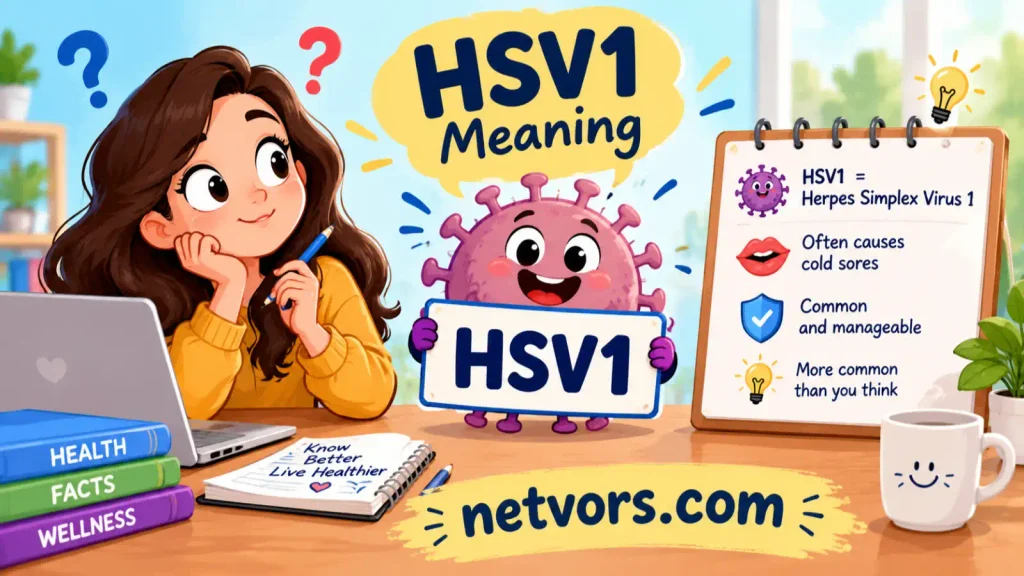
HSV-1 stands for herpes simplex virus type 1. It is a common virus that usually causes oral herpes, which can appear as cold sores or blisters around the lips and mouth. However, HSV-1 can also cause genital herpes.
The name may sound alarming, but understanding the facts makes a big difference. HSV-1 is widespread, many people never develop noticeable symptoms, and available treatments can help manage outbreaks.
According to the World Health Organization, approximately 3.8 billion people under age 50 worldwide were living with HSV-1 in 2020 estimates reported in its May 2025 fact sheet. That figure represents roughly 64% of the global population in that age group.
In this guide, you’ll learn what HSV-1 means, how it spreads, what symptoms to look for, how testing works, and what a positive result means for your everyday life.
Updated for October 2026: This guide explains established medical information in straightforward language. It is educational and does not replace advice from a qualified healthcare professional.
What Does HSV-1 Mean? Definition and Origin
HSV-1 is the abbreviation for herpes simplex virus type 1.
It belongs to a family of viruses that can infect the skin and mucous membranes, including the lining of the mouth and genital area. Once someone acquires HSV-1, the virus remains in the body, even if symptoms disappear completely.
The virus can become inactive for long periods and reactivate later, sometimes causing another outbreak.
What does each part of HSV-1 stand for?
The abbreviation is easier to understand when broken down:
- H: Herpes.
- S: Simplex.
- V: Virus.
- 1: Type 1 of the herpes simplex virus.
HSV-1 is one of two main herpes simplex virus types. The other is HSV-2.
Both types can cause herpes infections, but they differ in their usual patterns of transmission and recurrence.
What is the origin of the term HSV-1?
HSV-1 is a medical abbreviation, not internet slang or a texting expression.
The term comes from medical virology, the field that studies viruses and the infections they cause. Scientists distinguish HSV-1 from HSV-2 because identifying the type can help clinicians understand an infection and provide appropriate counseling.
There is no single social media platform or generation responsible for popularizing the abbreviation. It appears in medical records, laboratory reports, research papers, sexual health discussions, and everyday conversations about cold sores.
Quick Answer: HSV-1 Meaning
HSV-1 means herpes simplex virus type 1. It is a common virus that most often causes oral herpes, including cold sores around the lips. It can also cause genital herpes. Many infected people have no symptoms, and although the virus cannot currently be eliminated with a cure, treatments can help control outbreaks.
What Is HSV-1, and What Does It Do?
HSV-1 is a virus that usually enters the body through contact with infected oral or skin surfaces.
After infection, it can remain dormant in nearby nerve cells. If it reactivates, it may travel back to the skin or mucous membrane and cause symptoms.
Some people experience repeated cold sores. Others have only one noticeable outbreak, and many never recognize any symptoms at all.
HSV-1 most commonly causes two types of infection.
1. Oral HSV-1
Oral HSV-1 affects the mouth, lips, or surrounding areas.
It is commonly associated with cold sores, also called fever blisters. These may appear as small, fluid-filled blisters that break open, form a crust, and gradually heal.
The virus is often acquired during childhood through nonsexual contact, such as kissing or other direct contact with infected saliva or skin.
Having oral HSV-1 does not automatically mean someone acquired it through sexual activity.
2. Genital HSV-1
HSV-1 can also infect the genital area.
One way this happens is through oral sex when a person with oral HSV-1 passes the virus to a partner’s genital area.
Genital HSV-1 may cause painful blisters, sores, itching, tingling, or discomfort. Some people have mild symptoms or none at all.
Genital HSV-1 generally causes fewer recurrent outbreaks than genital HSV-2. However, recurrence patterns vary from person to person.
Important: A positive HSV-1 blood test alone cannot tell you whether the infection is oral or genital.
What Are the Symptoms of HSV-1?
Many people with HSV-1 never develop noticeable symptoms. When symptoms do appear, they vary depending on the infected area and whether it is the first recognized episode or a recurrence.
Common oral HSV-1 symptoms
Possible symptoms include:
- Small blisters on or around the lips.
- Painful sores inside or around the mouth.
- Tingling, itching, or burning before a cold sore appears.
- Tenderness or swelling around the affected area.
- Pain while eating or drinking if sores are present.
- Fever or body aches during some initial infections.
- Swollen lymph nodes in some cases.
A first noticeable oral infection may cause painful mouth sores or inflamed gums, particularly in children. Later outbreaks are often milder.
Possible genital HSV-1 symptoms
When HSV-1 affects the genital area, symptoms can include:
- Small blisters around the genitals or anus.
- Painful ulcers after blisters break open.
- Itching or tingling in the affected area.
- Pain when urinating if urine touches open sores.
- Tender lymph nodes in the groin.
- Fever or body aches during an initial episode.
These symptoms are not unique to herpes. Other infections and skin conditions can cause similar problems, so a healthcare professional may recommend testing.
Can you have HSV-1 without symptoms?
Yes. Many people carry HSV-1 without knowing it.
The absence of cold sores does not necessarily mean the virus is absent or cannot spread. HSV-1 can sometimes be shed from the skin or mucous membranes without visible symptoms.
This is one reason the infection is so widespread.
How Does HSV-1 Spread?
HSV-1 spreads primarily through direct contact with infected oral or skin surfaces.
The risk is generally greatest when active sores are present, although transmission can also occur without visible symptoms.
Common routes of transmission include:
Kissing: Contact with the mouth or lips of someone shedding the virus can transmit oral HSV-1.
Oral-genital contact: A person with oral HSV-1 can transmit the virus to a partner’s genital area during oral sex.
Direct contact with infected skin: Contact with an affected area can spread the virus, especially when sores are present.
Contact with infected saliva: Saliva can play a role in transmission, particularly during close oral contact.
Can HSV-1 spread when there are no cold sores?
Yes. Asymptomatic viral shedding means the virus can be present on the skin or mucous membranes even when no visible sore is present.
However, this does not mean transmission occurs every time someone has contact with an infected person. The risk varies depending on the type and location of infection, whether symptoms are present, and the nature of the contact.
Avoiding kissing and oral sex during an active cold sore or the tingling stage before an outbreak can reduce transmission risk.
Can you get HSV-1 from sharing drinks or utensils?
HSV-1 is primarily spread through direct contact. Sharing drinks or utensils is not considered a major route of transmission, and casual everyday contact is not the usual way the virus spreads.
You do not acquire genital herpes from toilet seats or swimming pools.
It is helpful to focus on established transmission routes rather than treating every shared household object as a danger.
What Does a Positive HSV-1 Test Mean?
A positive HSV-1 result means the test detected evidence of HSV-1 infection. The precise interpretation depends on which test was performed.
This distinction matters because different tests provide different kinds of information.
Positive HSV-1 blood test
A type-specific blood test looks for antibodies your immune system has produced in response to HSV-1.
A positive result generally indicates that you have been infected with HSV-1 at some point.
However, it usually cannot tell you:
- Whether the infection is oral or genital.
- Exactly when you acquired the virus.
- Who transmitted it to you.
- Whether you currently have an active outbreak.
HSV-1 antibody tests also have limitations in sensitivity, so results must be interpreted in context.
A positive blood test does not, by itself, establish a diagnosis of genital herpes.
Positive HSV-1 swab test
If you have a suspicious sore, a healthcare professional may collect a sample from it for laboratory testing.
A swab test using a method such as polymerase chain reaction (PCR) can identify HSV in the sampled lesion and determine its type.
When a sore is present, testing the lesion is generally more useful for establishing whether that particular outbreak is caused by HSV-1.
Does a positive HSV-1 result mean a recent infection?
Not necessarily.
HSV-1 can remain in the body for years without symptoms. A positive antibody test cannot reliably establish when the original infection occurred.
If your result raises questions about timing, recent exposure, or the location of infection, discuss the specific test and your medical history with a healthcare professional.
Routine blood screening for HSV-1 is not recommended for everyone. Testing decisions should take symptoms, exposure history, and the limitations of available tests into account.
HSV-1 vs. HSV-2: What’s the Difference?
HSV-1 and HSV-2 are related viruses, but they differ in their usual patterns of infection.
| Feature | HSV-1 | HSV-2 |
|---|---|---|
| Full name | Herpes simplex virus type 1 | Herpes simplex virus type 2 |
| Most common association | Oral herpes | Genital herpes |
| Common transmission routes | Oral contact and direct contact with infected surfaces | Primarily sexual contact involving infected genital or anal areas |
| Can cause genital herpes? | Yes | Yes |
| Can cause oral herpes? | Yes | Yes |
| Can occur without symptoms? | Yes | Yes |
| Can recur? | Yes | Yes |
| Permanent cure available? | No | No |
| Antiviral treatment available? | Yes | Yes |
The most important distinction is that HSV-1 is not limited to the mouth, and HSV-2 is not the only type that causes genital herpes.
The infection’s location matters when considering symptoms, recurrence, and transmission risk.
For example, genital HSV-1 typically recurs less often than genital HSV-2. This is one reason identifying the viral type can be useful after a genital herpes diagnosis.
How Is HSV-1 Treated?
There is currently no medication that completely eliminates HSV-1 from the body. However, antiviral medicines can help control symptoms and manage outbreaks.
Common prescription antivirals include:
- Acyclovir.
- Valacyclovir.
- Famciclovir.
The appropriate medicine and treatment schedule depend on the infection’s location, the severity of symptoms, your medical history, and whether the goal is to treat an outbreak or reduce recurrences.
A healthcare professional can determine which option is appropriate.
Treatment for cold sores
Cold sores often heal on their own, although they can be uncomfortable.
Depending on the circumstances, a clinician or pharmacist may recommend appropriate symptom relief or antiviral treatment. Prescription oral antivirals may be useful, particularly when treatment begins early.
For recurrent cold sores, a clinician can advise whether keeping prescribed medication available for the first signs of an outbreak would help.
Treatment for genital HSV-1
A first episode of genital herpes should be assessed by a healthcare professional. Prescription oral antiviral treatment is generally recommended for a first clinical episode.
For people with genital HSV-1, long-term suppressive antiviral treatment is usually considered when outbreaks are frequent or the symptoms cause substantial distress. The decision should be made with a healthcare professional.
Do not start prescription antiviral medicines without appropriate medical advice.
Can lifestyle changes cure HSV-1?
No. Healthy habits do not remove the virus from the body.
However, people who experience recurrent outbreaks may find it helpful to identify their personal triggers, which can sometimes include illness, stress, or sun exposure.
Adequate rest, general self-care, and appropriate treatment may help with managing episodes. These measures should complement, not replace, medical care when it is needed.
How Can You Reduce the Risk of Spreading HSV-1?
Although transmission cannot always be prevented, several practical steps can reduce the risk.
Avoid direct contact during outbreaks. Do not kiss others or engage in oral sex while you have an active cold sore. Avoid contact with an affected genital area when genital symptoms are present.
Pay attention to early warning signs. Tingling, burning, or itching can occur before a sore appears. Avoid activities that could transmit the infection during this period.
Discuss sexual health openly. If you know you have oral or genital herpes, communicate with your partner so you can make informed decisions together.
Use barriers during sexual activity. Condoms and dental dams can reduce the risk of transmission during sexual contact, but they cannot eliminate it because infected skin may remain uncovered.
Follow medical advice. Prescription antiviral treatment can help manage outbreaks. However, its effect on transmission depends on the type and location of HSV infection, and it does not eliminate all risk.
These measures are especially important when someone has a new infection, active sores, or a partner who has not been exposed to the virus.
Common Mistakes and Misunderstandings About HSV-1
HSV-1 is often misunderstood because people associate herpes exclusively with sexual activity.
Here are three common misconceptions.
Mistake 1: Assuming HSV-1 always means an STD
HSV-1 can be transmitted through nonsexual oral contact, and many people acquire it during childhood.
It can also cause genital herpes through oral-genital contact.
Therefore, an HSV-1 diagnosis alone does not reveal how the infection was acquired.
Mistake 2: Believing a person without sores cannot spread HSV-1
Visible sores increase transmission risk, but the virus can sometimes spread when no symptoms are present.
This does not mean transmission is inevitable. It means the absence of visible symptoms cannot guarantee that transmission is impossible.
Mistake 3: Assuming a positive HSV-1 blood test proves genital herpes
A blood test that detects HSV-1 antibodies generally cannot establish where the infection is located.
Someone may have oral HSV-1, genital HSV-1, or an infection whose location has never been clinically established.
A positive blood result should not be interpreted as proof of a genital infection without considering additional evidence.
Does having HSV-1 mean someone has been unfaithful?
No. A positive HSV-1 result cannot establish when or from whom the infection was acquired.
Because HSV-1 can remain unnoticed for years, a diagnosis alone cannot prove infidelity or reveal the circumstances of transmission.
It is more useful to discuss test results calmly and seek professional guidance than to draw conclusions that the test cannot support.
HSV-1 Across Relationships, Social Media, and Everyday Conversations
Unlike internet abbreviations such as LOL or BRB, HSV-1 is a medical term.
It is commonly used in discussions about cold sores, sexual health, laboratory results, dating, and relationships.
You may see it in a medical report, a health forum, a social media discussion, or a conversation about disclosing an infection to a partner.
Its meaning does not change between TikTok, Instagram, WhatsApp, Reddit, or Discord. The context may change, but the abbreviation still refers to herpes simplex virus type 1.
Is HSV-1 a formal or informal term?
HSV-1 is appropriate in both medical and everyday conversations.
Healthcare professionals may use the abbreviation in clinical records, while individuals may use it when discussing test results or explaining their health to a partner.
If someone is unfamiliar with the term, spelling out the full name is usually the clearest approach.
How can you explain HSV-1 to someone?
You could say:
“HSV-1 is a common virus that often causes cold sores, but it can also cause genital herpes. Many people have it without knowing, and treatment can help manage symptoms.”
This explanation is accurate without exaggerating the risks or making assumptions about how someone acquired the infection.
Related Medical Terms and Abbreviations
If you’re researching HSV-1, these related terms can help you understand medical reports and sexual health information.
| Term | Meaning |
|---|---|
| HSV | Herpes simplex virus; the family of viruses that includes HSV-1 and HSV-2 |
| HSV-2 | Herpes simplex virus type 2, commonly associated with genital herpes |
| Oral herpes | Herpes infection affecting the mouth or surrounding areas |
| Genital herpes | Herpes infection affecting the genital or anal area |
| Cold sore | A blister or sore commonly caused by oral HSV-1 |
| PCR | Polymerase chain reaction, a laboratory method used to detect viral genetic material |
| Antibodies | Proteins produced by the immune system in response to an infection |
| Asymptomatic shedding | Release of a virus from an infected surface when noticeable symptoms are absent |
| Antiviral medication | Medicine that helps control viral infections |
| STI | Sexually transmitted infection; an infection that can spread through sexual contact |
Understanding these terms can make medical reports easier to interpret and help you ask more informed questions during a healthcare appointment.
FAQs:
1. What does HSV-1 mean in simple words?
HSV-1 means herpes simplex virus type 1. It is a common virus that usually causes cold sores around the mouth, although it can also infect the genital area. Many people have HSV-1 without noticeable symptoms. While there is no permanent cure, antiviral medicines can help manage outbreaks and reduce symptoms.
2. Is HSV-1 the same as herpes?
HSV-1 is one type of herpes simplex virus. The word “herpes” can refer to infections caused by HSV-1 or HSV-2, depending on the context. HSV-1 most often causes oral herpes, while HSV-2 more commonly causes genital herpes. Both types can affect either location, so the viral type and infection site are not interchangeable.
3. Is HSV-1 a sexually transmitted disease?
HSV-1 is not exclusively a sexually transmitted infection. Many people acquire oral HSV-1 through nonsexual contact during childhood. However, HSV-1 can spread through oral sex and cause genital herpes. If HSV-1 is detected in a blood test, that result alone does not establish whether the infection is oral or genital or how it was acquired.
4. Can HSV-1 go away permanently?
HSV-1 usually remains in the body for life. Symptoms may disappear, and the virus can stay inactive for long periods, but healing does not mean the infection has been eliminated. Antiviral medications can shorten outbreaks or help prevent recurrent episodes in selected cases. A healthcare professional can advise you about treatment based on your symptoms and circumstances.
5. Can HSV-1 spread without symptoms?
Yes. HSV-1 can sometimes spread when an infected person has no visible sores or other symptoms. This is known as asymptomatic viral shedding. The risk is generally greater when active sores are present, but transmission is not limited to visible outbreaks. Avoiding direct contact during symptoms and following appropriate prevention advice can reduce the risk.
6. What does HSV-1 positive mean on a blood test?
A positive HSV-1 antibody test generally means your immune system has responded to an HSV-1 infection at some point. It does not usually reveal when you acquired the virus or whether the infection is oral or genital. If you have a sore, a healthcare professional may recommend a swab test to identify the virus at the affected site.
7. Can HSV-1 be cured with medication?
No currently available treatment permanently eliminates HSV-1 from the body. Prescription antiviral medicines, including acyclovir and valacyclovir, can help control outbreaks and reduce symptoms. The best treatment depends on the infection’s location, symptom severity, and recurrence pattern. Speak with a healthcare professional before starting medication.
8. Is HSV-1 dangerous?
For most otherwise healthy people, HSV-1 causes no symptoms or manageable episodes of cold sores. However, it can occasionally cause serious complications, particularly in newborns and people with weakened immune systems. Eye involvement can also threaten vision. Seek prompt medical attention for eye pain or redness with suspected herpes, severe or unusual symptoms, or possible exposure involving a newborn.
9. Can you date or marry someone who has HSV-1?
Yes. HSV-1 is common, and a diagnosis does not prevent someone from having a healthy relationship. Partners can discuss the infection, understand how it spreads, and make informed choices about reducing transmission risk. Avoiding direct contact during outbreaks and using appropriate barriers during sexual activity can help. Individual circumstances may warrant advice from a healthcare professional.
10. Should everyone get tested for HSV-1?
No. Routine HSV-1 blood screening is not recommended for everyone because the tests have limitations and a positive result often cannot identify the infection’s location. Testing may be useful in specific circumstances, particularly when symptoms are present or a clinician needs to investigate a possible infection. Discuss your symptoms, exposure history, and testing options with a qualified healthcare professional.
Conclusion:
HSV-1 means herpes simplex virus type 1, a common virus most often associated with cold sores. It can also cause genital herpes, and many people carry it without ever noticing symptoms.
Although HSV-1 cannot currently be cured, treatments are available to manage outbreaks. Understanding how the virus spreads, what test results mean, and how to reduce transmission can help you make informed decisions about your health and relationships.
Remember, a positive HSV-1 result does not tell the whole story. If you’re concerned about symptoms or a laboratory report, a healthcare professional can help you interpret the findings and decide whether further testing or treatment is appropriate.
Have questions about HSV-1, HSV-2, or another medical abbreviation? Share the term you’d like explained next, and explore more of our health and meaning guides for straightforward, reliable information.

Hi, I’m John Cate, the voice behind Netvors.com, where I turn confusing words into clear meaning.
I’ve always been fascinated by how language evolves. One day a word means one thing, the next day it means something completely different, especially online. That shift is exactly what inspired me to build Netvors: a space where meanings are simple, accurate, and actually useful.