Have you ever heard someone say, “Don’t be such a pansy,” and wondered what they actually meant? Maybe you saw the word in a movie, online comment, or during a heated conversation.
While it might sound harmless at first, the term carries much more history and emotional weight than many people realize.
Pansy meaning insult is one of the most searched questions because the word has changed over time.
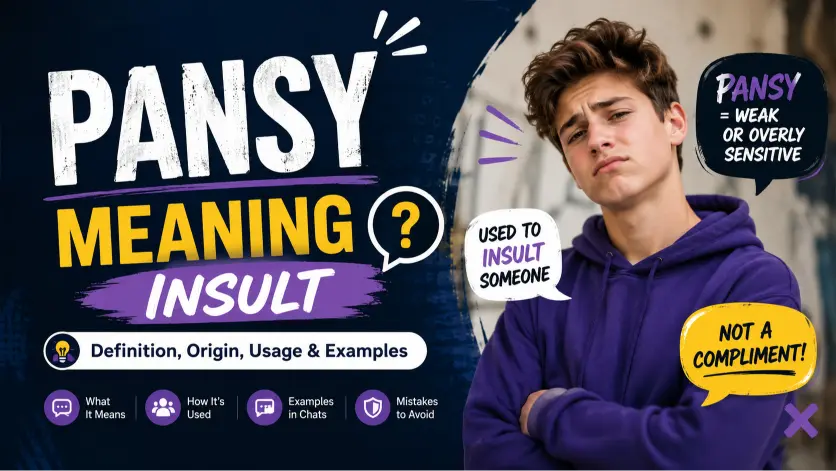
Although it originally referred to a colorful flower, it later became a slang insult aimed primarily at men who were seen as weak, overly emotional, or feminine.
Today, many people recognize it as an outdated and offensive expression because of its historical connection to homophobic stereotypes.
Updated for 2026, this guide explains the meaning in simple language. You’ll discover where the word came from, how people use it today, why it can be offensive, and what respectful alternatives you can use instead.
What Does “Pansy” Mean?
The word pansy originally refers to a flowering plant known for its bright, colorful petals. However, when used about a person, pansy becomes an insult.
As an insult, pansy describes someone usually a man or boy as:
- weak
- timid
- overly sensitive
- lacking courage
- feminine in a negative or mocking way
Historically, the word was also directed at gay men, making it a term that many people now consider disrespectful or offensive.
Quick Answer
Pansy is an insulting slang term traditionally used to mock a man for appearing weak, timid, or feminine. Because it has a history as a homophobic slur, it’s generally considered offensive and should be avoided in respectful conversation.
How the Meaning Has Changed Over Time
Like many slang terms, pansy has evolved.
Then
Years ago, people commonly used it to insult:
- shy boys
- sensitive men
- men who avoided fighting
- gay men
Back then, many speakers didn’t question the harm behind the word.
Today
Modern English speakers are much more aware of respectful language.
Today, pansy is generally viewed as:
- outdated
- disrespectful
- insulting
- potentially homophobic
While you might still hear it in older movies, television shows, books, or online arguments, it’s far less acceptable in everyday conversation.
Instead, people usually choose neutral words that describe behavior without attacking someone’s identity.
Examples include:
- timid
- cautious
- nervous
- gentle
- sensitive
- hesitant
These words communicate the same idea without using offensive language.
Why Is “Pansy” Considered Offensive?

The biggest reason is its history.
The insult doesn’t simply mean “weak.”
For decades, it was specifically used to mock men who didn’t fit traditional masculine stereotypes. It was also commonly directed at gay men, reinforcing harmful assumptions about gender and sexuality.
Because of this history, many people see the word as:
- disrespectful
- discriminatory
- emotionally hurtful
- unnecessary in modern communication
Even if someone doesn’t intend to offend, listeners may still find the term insulting because of its past.
A safer approach is to describe the actual behavior instead of using labels.
For example:
❌ “He’s such a pansy.”
feeling nervous.”
being cautious.”
uncomfortable with that.”
These alternatives are clearer, kinder, and more accurate.
Is “Pansy” Always an Insult?

Almost always—when referring to a person.
There are only two common situations where the word isn’t offensive:
1. Talking About the Flower
Example:
“The garden is full of beautiful purple pansies.”
Here, pansy simply refers to the plant.
2. Historical or Educational Discussions
Teachers, historians, dictionaries, and language experts may explain the word without intending to insult anyone.
Example:
“The word pansy became a derogatory term during the early twentieth century.”
In this context, the word is being analyzed—not used as an insult.
How to Use “Pansy” Correctly in Texts & Chat
Understanding the pansy meaning (insult) is only half the story. It’s just as important to know when the word appears, how people use it online, and why it’s usually best to avoid using it yourself.
In modern English, pansy is almost always used as a negative label, not a compliment. Because it has a history of mocking masculinity and gay men, many people find it offensive even if the speaker claims they were “just joking.”
When People Use “Pansy”
You may encounter the word in situations like:
- Friendly teasing between close friends (though still risky)
- Heated online arguments
- Sports banter
- Older movies and TV shows
- Classic books or historical texts
- Social media comments
- Gaming voice chats
Even in these settings, the word can easily upset someone or start an unnecessary argument.
Casual Example
Alex: “I’m not riding that roller coaster.”
Ben: “Come on, don’t be such a pansy.”
Here, Ben is calling Alex fearful or timid. While some friends might laugh it off, others could find it insulting.
Platform-Specific Usage
Different online platforms have different cultures, but the meaning stays the same.
SMS & Text Messages
People sometimes use pansy jokingly among close friends.
Example:
“Quit being a pansy and try the spicy wings 😂”
Although intended as humor, not everyone appreciates this kind of teasing.
In family or friend group chats, the word occasionally appears when someone refuses to do something challenging.
Example:
“Who’s scared now? Don’t be a pansy.”
Since tone is hard to read in text, messages like this can easily be misunderstood.
Instagram DMs & Comments
On Instagram, pansy is more likely to appear in arguments or sarcastic comments than in friendly conversations.
Example:
“Stop acting like a pansy.”
Because comments are public, using insulting language may reflect poorly on the writer.
X (formerly Twitter)
Short posts often contain strong opinions, and insults sometimes spread quickly.
Example:
“People calling everyone a pansy instead of discussing the issue isn’t helpful.”
Notice that here the word is being discussed, not used as an insult.
Discord
Gaming communities sometimes use words like pansy during competitive matches.
Example:
“Don’t play so safe—you pansy.”
Many Discord servers discourage insulting language and may remove users who repeatedly harass others.
On Reddit, you’ll usually see the word mentioned in discussions about language, history, politics, or old movies rather than as an everyday insult.
Example:
“Is the word pansy considered offensive today?”
Educational conversations like this are very common.
When NOT to Use “Pansy”
In most situations, it’s better to avoid using the word altogether.
Avoid using it in:
- Professional emails
- School assignments
- Workplace chats
- Customer service conversations
- Public speeches
- Job interviews
- Social media posts under your real name
- Conversations with people you don’t know well
Because the term has a long history as a slur, it can make others feel uncomfortable or disrespected.
Instead of labeling someone, describe their behavior more accurately.
For example:
❌ “He’s such a pansy.”
Better alternatives:
- “He’s feeling nervous.”
- “He’s being cautious.”
- “He’s hesitant.”
- “He’s uncomfortable.”
- “He’s not ready yet.”
These alternatives communicate the same idea without insulting anyone.
Tone and Emotional Meaning
When someone says pansy, they’re usually expressing one of these emotions:
- Mockery
- Frustration
- Sarcasm
- Teasing
- Anger
- Disrespect
Unlike playful slang such as “goofball” or “nerd,” pansy often attacks someone’s identity or masculinity, which is why it can feel much harsher.
Capitalization and Formatting Tips
When writing the word:
- Lowercase (pansy) is the standard form.
- Capitalize only when it begins a sentence.
- Avoid writing it in ALL CAPS unless you’re quoting someone.
Examples:
✅ “He called him a pansy.”
✅ “Pansy was once a common insult.”
❌ “YOU’RE A PANSY!!!”
Writing insults in all caps usually makes them appear even more aggressive.
Emoji Pairings
People sometimes pair the word with emojis to soften the tone—but emojis don’t erase the insult.
Examples you might see online:
- 😂
- 😅
- 🙄
- 😏
Example:
“Don’t be such a pansy 😂”
Even with a laughing emoji, someone may still find the message offensive.
Real Conversation Examples Using “Pansy”
Seeing the word in context makes its meaning much easier to understand. Below are several realistic conversations showing how people use “pansy”—and what the speaker is trying to convey.
Example 1: Between Friends
Jake: “I’m not jumping into that freezing lake.”
Ryan: “Come on, don’t be such a pansy!”
What it means
Ryan is teasing Jake for being afraid of the cold. While this may be intended as friendly banter, Jake could still take offense depending on their relationship.
Example 2: Dating Conversation
Emma: “Why didn’t you tell her how you feel?”
Noah: “I got nervous.”
Emma: “Don’t be a pansy just ask her out.”
What it means
Emma is criticizing Noah for lacking confidence. A kinder response would encourage him without using an insulting label.
Example 3: Family Conversation
Dad: “Can you help carry these boxes?”
Son: “They’re really heavy.”
Dad: “You’re not a pansy, are you?”
What it means
Older generations sometimes use the word jokingly to encourage toughness. Today, many families prefer more respectful language.
Example 4: Work Chat
Coworker 1: “I’m a little nervous about presenting.”
Coworker 2: “Don’t be a pansy.”
What it means
This is not appropriate for the workplace. It can be viewed as insulting, unprofessional, or even harassment. A supportive response would be:
“You’ll do great you’ve prepared well.”
Emotional Impact of the Word
Across all these examples, pansy usually conveys:
- Ridicule
- Judgment
- Pressure to appear “tough”
- Dismissal of someone’s feelings
- Reinforcement of outdated gender stereotypes
That’s why many people choose more respectful words that describe behavior rather than attack a person’s identity.
Common Mistakes & Misunderstandings
Even though **pansy meaning (insult) is fairly straightforward, many people misunderstand how the word should or shouldn’t be used. Below are the most common mistakes and how to avoid them.
Mistake 1: Thinking It Only Means “Coward”
Many people assume pansy simply means “coward” or “someone who’s scared.”
While fear is often part of the insult, the word has historically carried a deeper meaning. It has been used to mock men for appearing feminine or for not fitting traditional ideas of masculinity.
Better Alternatives
If you only mean someone is afraid, use more accurate words like:
- Nervous
- Timid
- Hesitant
- Cautious
- Fearful
These words describe behavior without insulting someone’s identity.
Mistake 2: Assuming It’s Harmless Teasing
Some people believe saying “Don’t be a pansy” is just playful banter.
However, because of the word’s history as a homophobic slur, not everyone sees it as harmless. A joke among close friends may still hurt someone’s feelings or make others uncomfortable.
Rule of thumb: If you’re unsure whether someone will appreciate the joke, don’t use the word.
Mistake 3: Using It in Professional Settings
Calling a coworker, employee, classmate, or customer a pansy is inappropriate.
Examples where it should never be used include:
- Business emails
- Workplace meetings
- School presentations
- Customer support
- Job interviews
- Professional networking
Choosing respectful language helps maintain trust and professionalism.
Generational Differences
Different generations may react to the word differently.
Baby Boomers
Older generations may remember hearing pansy used casually in movies, sports, or everyday conversations. Some may not realize how offensive it can sound today.
Generation X
Many Gen X speakers recognize the word as an outdated insult but generally avoid using it in public.
Millennials
Millennials are more likely to understand its historical connection to homophobia and choose neutral alternatives instead.
Generation Z
Gen Z tends to avoid words that reinforce harmful stereotypes. When the term appears online, it’s often quoted for discussion rather than used as an insult.
Cultural Differences
English speakers around the world recognize pansy, but how often it’s used varies by country.
United States
The term is widely understood but considered old-fashioned and offensive.
United Kingdom
British English speakers also recognize it as a derogatory term, though it appears less frequently than in the past.
Canada & Australia
The word is known but generally avoided in polite conversation.
Non-Native English Speakers
People learning English may encounter pansy in movies, books, or online comments without realizing it’s offensive. That’s why understanding context is so important.
What If Someone Calls You a “Pansy”?
If someone uses the word toward you, remember that it’s usually intended to criticize or mock not to describe you accurately.
You can respond in several ways:
- Ignore the comment.
- Calmly ask what they mean.
- Tell them you don’t appreciate the language.
- Redirect the conversation.
- Walk away if the interaction becomes disrespectful.
Responding calmly often works better than arguing.
Pansy Across Different Platforms & Demographics
Language changes quickly online, and so does slang. While pansy still appears in some places, it’s much less common than it once was.
TikTok
On TikTok, the word usually appears in:
- Discussions about offensive language
- Movie or TV clips
- Historical explanations
- Comment debates
Most creators avoid using it as an insult because it may violate community guidelines or attract criticism.
Instagram users rarely use pansy in captions.
Instead, it appears more often in comment sections where people argue or discuss older expressions.
Overall, respectful language is far more common.
Discord
Gaming communities occasionally use the word during competitive matches.
Example:
“Quit hiding—you pansy.”
However, many Discord servers have moderation rules against insults and personal attacks.
On Reddit, you’ll usually see pansy discussed rather than used.
Common discussion topics include:
- Language history
- Offensive slang
- Dictionary meanings
- Old movies and literature
- Social change
Related Slang, Abbreviations & Alternatives
If you’re learning the pansy meaning (insult), you may also come across these related words. Some are neutral, while others are slang or offensive.
| Word | Meaning | Tone |
|---|---|---|
| Timid | Easily frightened or shy | Neutral |
| Hesitant | Slow to act because of uncertainty | Neutral |
| Sensitive | Easily affected emotionally | Neutral |
| Coward | Someone lacking courage | Negative |
| Wimp | Informal word for someone seen as weak | Mildly Negative |
| Weakling | Physically or mentally weak person | Negative |
| Chicken | Afraid to do something | Informal |
| Soft | Not tough or aggressive | Context-dependent |
| Brave | Showing courage | Positive (opposite) |
| Confident | Self-assured | Positive (opposite) |
FAQs:
What does pansy mean as an insult?
When used as an insult, pansy refers to a person—usually a man—who is perceived as weak, timid, or overly feminine. Because of its history as a homophobic slur, many people consider it offensive today.
Is pansy a bad word?
It can be. While it’s not profanity, it is generally considered a derogatory term. In most situations, especially with people you don’t know well, it’s best to avoid using it.
Why is pansy offensive?
The word has historically been used to shame men who didn’t fit traditional masculine stereotypes and to insult gay men. That history makes it hurtful for many people today.
Does pansy only refer to men?
Historically, yes. The insult was almost always directed at men or boys. Today, it may occasionally be used more broadly, but its original meaning remains closely tied to outdated gender stereotypes.
Is pansy still commonly used?
Not as much as it once was. You’ll mostly encounter it in older books, classic movies, online discussions about language, or occasional arguments. Many English speakers now prefer more respectful and precise words.
It’s acceptable when referring to the flower or when discussing the word in an educational or historical context. Using it to insult someone is generally discouraged.
Conclusion:
Language changes over time, and **pansy meaning insult is a good example of how a simple word can take on a very different meaning. What started as the name of a flower eventually became a derogatory label aimed at people who didn’t fit traditional expectations of masculinity.
Today, most English speakers recognize pansy as an outdated and potentially offensive insult. Understanding its history helps you recognize why many people avoid using it in everyday conversation.
If you’re ever unsure which word to choose, describing someone’s actual behaviorsuch as saying they’re hesitant, nervous, or cautious is usually clearer, kinder, and more respectful.

Hi, I’m John Cate, the voice behind Netvors.com, where I turn confusing words into clear meaning.
I’ve always been fascinated by how language evolves. One day a word means one thing, the next day it means something completely different, especially online. That shift is exactly what inspired me to build Netvors: a space where meanings are simple, accurate, and actually useful.