Have you ever looked at your salary slip, received a tax notice, or watched the news discussing government budgets and wondered, “What exactly does income tax mean?” You’re not alone.
Whether you’re starting your first job, running a business, freelancing online, or simply trying to understand your finances, knowing the income tax meaning is an essential life skill. Income tax affects millions of people worldwide, yet many still find the concept confusing because of legal jargon and complicated financial terms.
The good news? It doesn’t have to be difficult.
In this updated 2026 guide, you’ll discover the simple meaning of income tax, where it originated, how it works, when people have to pay it, practical examples, common misconceptions, and why understanding income tax can help you make smarter financial decisions.
What Does “Income ?
Quick Answer
Income tax is a government tax charged on the money a person or business earns during a specific period. The amount owed usually depends on the individual’s or company’s taxable income and the tax laws of their country.
In simple English, income tax is money that governments collect from people’s earnings to pay for public services like roads, hospitals, schools, police, defense, and infrastructure.
If you earn money through a salary, business, freelancing, investments, rental property, or other sources, you may be required to pay income tax according to your country’s laws.
Simple Definition
Income tax is:
- A direct tax
- Charged on income or profits
- Collected by the government
- Used to fund public services
Simply put:
You earn money → Government calculates taxable income → You pay a portion as income tax.
Pronunciation
Income Tax
Pronunciation: IN-kum TAKS
Phonetic pronunciation:
/ˈɪn.kʌm tæks/
Origin of the Term “Income Tax”
The phrase income tax comes from combining two English words:
- Income = money earned
- Tax = a compulsory payment to the government
Although taxes have existed for thousands of years, modern income tax systems are relatively recent.
Historical Timeline
Ancient Civilizations
Early governments in Egypt, Rome, China, and Mesopotamia collected taxes on crops, land, livestock, and trade rather than personal income.
1799
Modern income tax was first introduced in Britain by Prime Minister William Pitt the Younger to finance military expenses during the Napoleonic Wars.
19th Century
Many European countries gradually adopted income taxation.
1913
The United States officially introduced federal income tax after the ratification of the 16th Amendment.
Today
Nearly every developed country has some form of income tax system.
How Income Tax Has Evolved
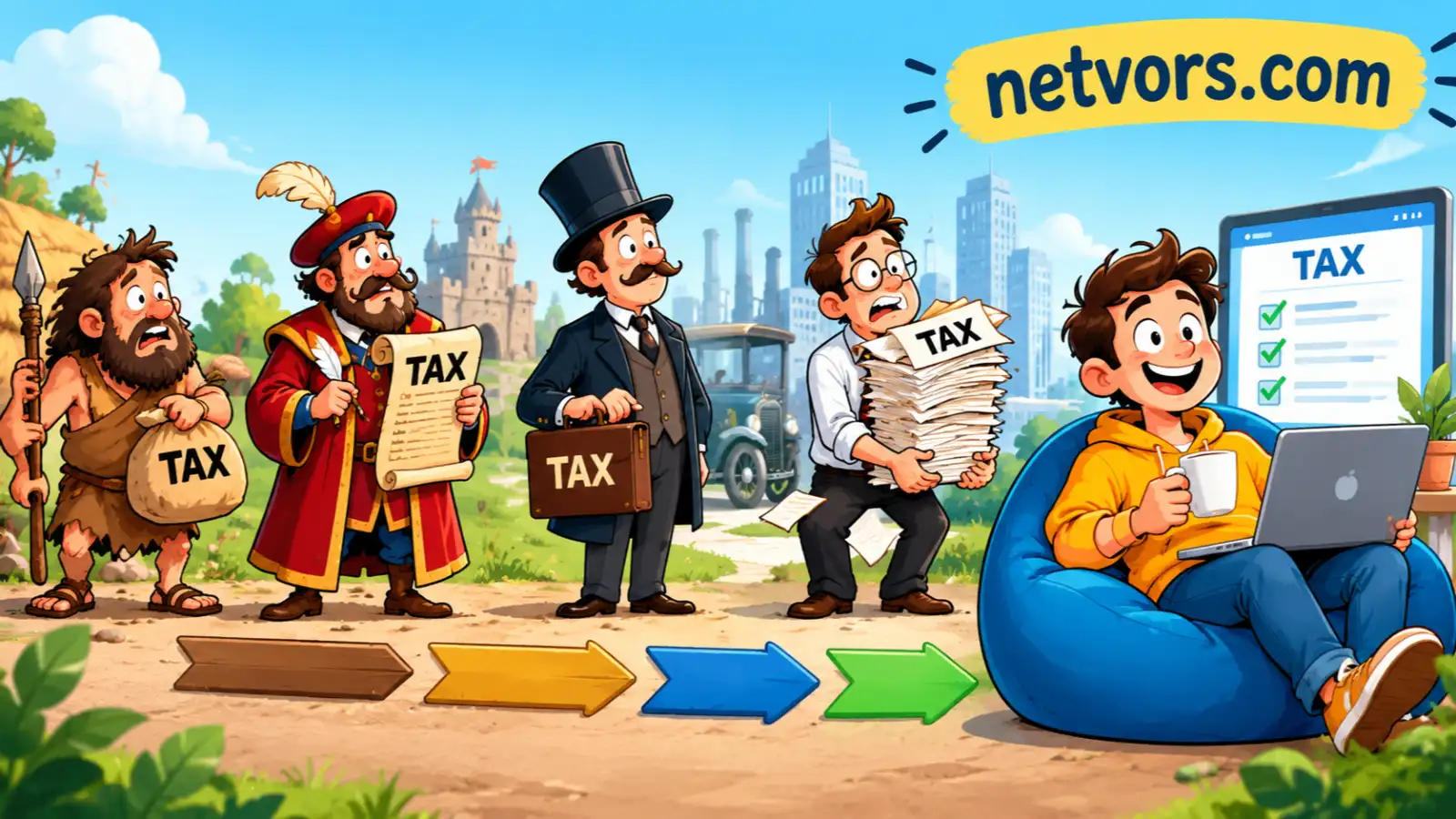
Originally, governments mainly taxed landowners and wealthy citizens.
Today, income tax systems include earnings from:
- Employment
- Businesses
- Freelancing
- Investments
- Capital gains
- Rental income
- Royalties
- Foreign income (in some countries)
Modern governments also provide deductions, exemptions, rebates, and tax credits that reduce the amount many taxpayers owe.
How to Use “Income Tax” Correctly
Unlike internet slang or abbreviations, income tax is a formal financial term used in legal, educational, and everyday conversations.
Appropriate Situations
You can use the term when discussing:
- Personal finance
- Salary
- Government policies
- Business accounting
- Tax returns
- Budget planning
- Investments
- Employment
Examples include:
- “I need to file my income tax return.”
- “My income tax increased after my promotion.”
- “Small businesses also pay income tax.”
- “Understanding income tax helps you manage your finances.”
Tone
Income tax is generally used in:
- Formal conversations
- Workplace discussions
- Government documents
- Financial news
- Banking
- Educational materials
It can also appear casually when discussing salaries or budgeting with friends and family.
Where You’ll Commonly See It
“I’ve completed my income tax filing.”
Salary Slips
Income tax deduction
Banking Apps
Estimated income tax
Government Websites
Income tax return
The income tax calculator
Income tax refund
News Articles
Income tax reforms
The income tax rates
Income tax policy
Business Documents
Corporate income tax
Income tax liability
Income tax expense
When NOT to Use the Term
Although the phrase is common, avoid using it incorrectly.
Incorrect
“I paid income tax at the grocery store.”
Sales tax and income tax are different.
Incorrect
“My phone has income tax.”
Income tax only applies to earnings, not products.
Incorrect
“Income tax means every person pays the same amount.”
Most countries use different tax rates depending on income level and tax laws.
Capitalization Tips
Generally:
- income tax ✅
- Income Tax (only in titles or official names) ✅
- INCOME TAX (headings or emphasis) ✅
Normal writing should use lowercase unless it begins a sentence.
Related Financial Terms
People often confuse income tax with:
- Sales tax
- Property tax
- Payroll tax
- Capital gains tax
- Corporate tax
Each refers to a different type of taxation.
Real-Life Examples Using “Income Tax”
Understanding the phrase becomes much easier when you see it used in everyday situations.
Example 1 — Between Friends
Ali: I finally got my first salary.
Ahmed: Nice! Did your company deduct income tax?
Ali: Yes, a small amount was automatically deducted.
Meaning
Here, income tax refers to the government’s deduction from employment earnings.
Example 2 — Workplace
Manager: Please submit your income tax documents before Friday.
Employee: I’ll upload them today.
Meaning
The term relates to employment records and tax compliance.
Example 3 — Small Business Owner
Sara: My online business earned much more this year.
Accountant: That means your income tax liability may increase.
Meaning
Higher profits often result in higher taxable income.
Example 4 — Family Conversation
Father: Have you filed your income tax return?
Son: Not yet. I’m collecting all my income records.
Meaning
The discussion focuses on annual tax filing.
Example 5 — Freelancer
Client: Do you include taxes in your invoice?
Freelancer: I calculate my income tax separately at the end of the year.
Meaning
Freelancers usually manage their own income tax responsibilities instead of having taxes deducted automatically.
Example 6 — News Discussion
Reporter: The government announced new income tax rates for next year.
Viewer: That may affect my take-home salary.
Meaning
Income tax policy changes directly impact taxpayers’ earnings.
Common Mistakes & Misunderstandings
Many people misunderstand how income tax works. Here are the most common mistakes.
1. Thinking Income Tax and Sales Tax Are the Same
This is probably the biggest misconception.
Income tax is charged on money you earn.
Sales tax is charged when you buy goods or services.
These are completely different taxes.
2. Believing Everyone Pays the Same Rate
Many countries use progressive tax systems.
That means:
- Lower-income earners often pay less.
- Higher-income earners may pay higher tax rates.
The exact rules vary by country.
3. Assuming Only Employees Pay Income Tax
Employees aren’t the only taxpayers.
Income tax may also apply to:
- Freelancers
- Business owners
- Investors
- Consultants
- Landlords
- Self-employed professionals
Different income sources can have different reporting requirements.
4. Confusing Gross Income with Taxable Income
Many beginners believe tax is calculated on every dollar they earn.
In reality, governments often allow deductions, exemptions, or tax credits before calculating the final taxable income.
This means taxable income can be lower than total earnings.
5. Ignoring Filing Deadlines
Some people assume taxes are automatically handled.
While employers may withhold taxes, many individuals—especially freelancers and business owners—must still file annual tax returns on time to avoid penalties.
Generational Misunderstandings
Younger adults entering the workforce often assume income tax only matters once they earn a high salary.
Older generations generally understand that even modest earnings may have tax implications depending on local laws, deductions, and filing thresholds.
Learning the basics early helps avoid confusion later.
Cultural Differences
Income tax systems differ widely across countries.
Some nations have relatively low income tax rates, while others fund extensive public services through higher taxation. Filing procedures, exemptions, and reporting rules also vary, making it important to follow the laws where you live or earn income.
How to Clarify the Meaning
If someone seems confused, a simple explanation works best:
“Income tax is the portion of your earnings that the government collects to fund public services like healthcare, education, roads, and national infrastructure.”
This plain-language definition is accurate, easy to remember, and useful in everyday conversations.Here’s Part 2 of your article, continuing seamlessly from Part 1.
Income Tax Across Different Platforms & Demographics
Unlike internet slang, income tax isn’t a trending phrase that changes meaning across social media. However, the way people talk about it varies depending on the platform and audience.
Gen Z
Many Gen Z users encounter income tax for the first time when they start their first job, begin freelancing, or earn money through content creation. On platforms like TikTok and Instagram, discussions often focus on:
- Tax tips for first-time employees
- Freelancer tax advice
- Side hustle income
- Budgeting after taxes
- Tax refund stories
The language is usually casual and simplified, making complex tax topics easier to understand.
Millennials
Millennials frequently discuss income tax in relation to:
- Career growth
- Home ownership
- Investing
- Family finances
- Business income
This generation often searches for ways to legally reduce taxable income through deductions, retirement contributions, and investment planning.
Older Generations
Older adults typically view income tax as a routine financial responsibility. Their conversations are more likely to involve:
- Retirement income
- Pension taxation
- Investment earnings
- Estate planning
- Annual tax filing
Experience often makes them more familiar with tax rules and deadlines.
On TikTok
Tax educators and financial creators regularly post short videos explaining topics such as:
- “How income tax works”
- “Common tax mistakes”
- “Understanding tax brackets”
- “How to file your first tax return”
These videos are designed to simplify tax concepts for beginners.
On Instagram
Instagram users often share:
- Salary breakdowns
- Budgeting graphics
- Tax-saving tips
- Personal finance reels
- Tax season reminders
Visual infographics make income tax concepts easier to digest.
On LinkedIn
LinkedIn discussions are generally professional and focus on:
- Payroll taxes
- Employee benefits
- Corporate taxation
- Financial planning
- Regulatory updates
Businesses and finance professionals frequently share tax-related insights.
On Reddit
Reddit communities dedicated to personal finance and investing often feature detailed discussions about:
- Filing tax returns
- Self-employment taxes
- Capital gains
- Tax deductions
- Real-world tax experiences
Users often share personal situations and seek advice from experienced community members.
Is Income Tax Formal or Informal?
Income tax is considered a formal financial term.
It is appropriate for:
- Government documents
- Academic writing
- Workplace communication
- Financial news
- Banking
- Legal documents
It can also be used casually when discussing salaries, budgeting, or tax refunds with friends and family.
Is It Safe for Work?
Yes.
The phrase income tax is completely safe for work (SFW) and appropriate in virtually every professional, educational, and public setting.
Related Financial Terms, Synonyms & Alternatives
Understanding similar financial terms helps you avoid confusion. While some are closely related to income tax, others refer to entirely different types of taxes.
| Term | Meaning | How It Differs from Income Tax |
|---|---|---|
| Tax | A compulsory payment to the government | General term covering all taxes |
| Tax Return | A form reporting income and taxes | Used to calculate or claim refunds |
| Taxable Income | Income subject to taxation | Basis for calculating income tax |
| Tax Deduction | Expense that reduces taxable income | Can lower the amount of tax owed |
| Tax Credit | Direct reduction of tax liability | Reduces taxes dollar for dollar |
| Payroll Tax | Tax related to employment | Often separate from income tax |
| Sales Tax | Tax on purchases | Paid when buying goods or services |
| Property Tax | Tax on real estate | Based on property value, not earnings |
| Corporate Tax | Tax on company profits | Applies to businesses rather than individuals |
| Capital Gains Tax | Tax on investment profits | Charged on gains from selling assets |
Related Topics to Explore
If you’re learning about personal finance, these topics naturally connect with income tax:
- Learn more about taxable income
- Learn more about tax deductions
- Learn more about tax credits
- Learn more about capital gains tax
- Learn more about sales tax
These concepts help build a stronger understanding of how taxation works.
FAQs:
What is income tax in simple words?
Income tax is a payment that individuals and businesses make to the government based on the money they earn. Governments use these funds to pay for public services such as healthcare, education, transportation, security, and infrastructure.
Who has to pay income tax?
Anyone who earns taxable income may have to pay income tax, depending on their country’s tax laws and income thresholds. This can include employees, freelancers, business owners, investors, and self-employed individuals.
Why do governments collect income tax?
Income tax provides governments with revenue to fund essential public services. Without it, governments would struggle to finance schools, hospitals, roads, emergency services, national defense, and many other public programs.
Is income tax the same as payroll tax?
No.
Income tax is based on taxable earnings, while payroll taxes are typically used to fund specific government programs such as social security, pensions, or healthcare. In many countries, both taxes may appear on an employee’s paycheck.
Can income tax be reduced legally?
Yes.
Many governments allow legal ways to reduce taxable income through deductions, exemptions, retirement contributions, charitable donations, education expenses, or tax credits. The available options depend on local tax laws.
What happens if you don’t pay income tax?
Failing to pay or file income tax when required may result in penalties, interest charges, audits, or legal action. It’s always best to understand your tax obligations and meet filing deadlines.
Do students have to pay income tax?
Students may need to pay income tax if their earnings exceed the minimum taxable threshold set by their country’s tax authority. Part-time jobs, internships, freelance work, or investment income can all affect tax responsibilities.
Is income tax different in every country?
Yes.
Every country has its own tax rates, exemptions, filing procedures, and tax brackets. Some countries use progressive tax systems, while others apply flat tax rates or have little to no personal income tax.
Conclusion:
Understanding the income tax meaning is an important step toward becoming financially informed. Whether you’re earning your first paycheck, running a business, or simply trying to understand how governments fund public services, knowing how income tax works can help you make better financial decisions.
Although tax laws vary from country to country, the basic idea remains the same: income tax is a compulsory payment on earnings that helps fund essential services like healthcare, education, infrastructure, and public safety. Learning the fundamentals today can save you time, money, and confusion in the future.
We hope this guide has made the concept simple and easy to understand. If you found it helpful, explore more of our finance glossary and share this guide with someone who’s learning about taxes for the first time!

Hi, I’m John Cate, the voice behind Netvors.com, where I turn confusing words into clear meaning.
I’ve always been fascinated by how language evolves. One day a word means one thing, the next day it means something completely different, especially online. That shift is exactly what inspired me to build Netvors: a space where meanings are simple, accurate, and actually useful.