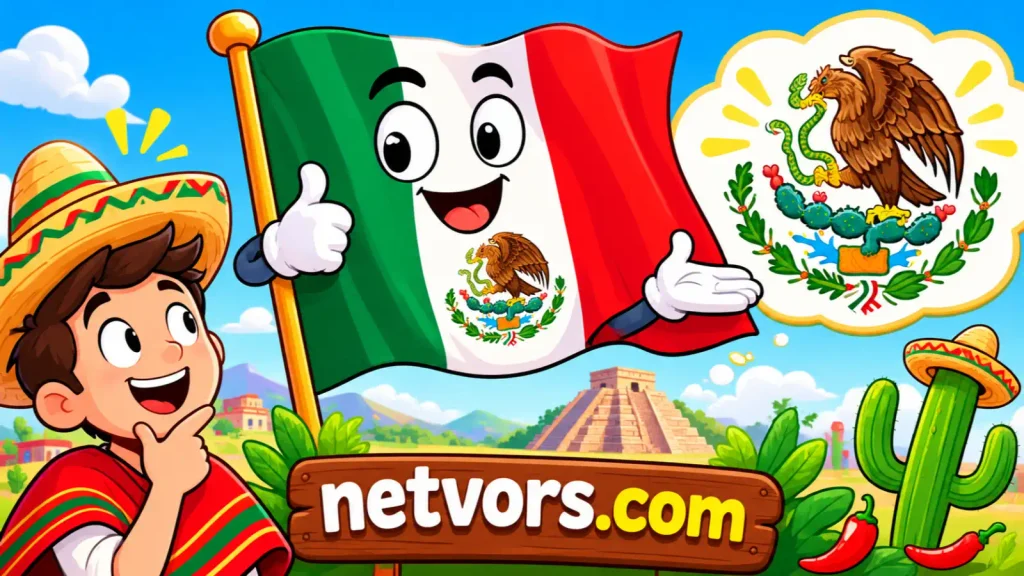
Have you ever looked at the Mexican flag and wondered why it features a powerful eagle holding a snake, or what its green, white, and red stripes actually represent? There is much more to this national symbol than its striking colors.
The Mexico flag meaning is rooted in the country’s independence, Indigenous heritage, national unity, and centuries of history. Every major element—from the three vertical stripes to the eagle perched on a cactus—helps tell the story of how Mexico developed its national identity.
Unlike flags whose symbolism is mainly expressed through colors, Mexico’s flag combines a tricolor design with a detailed coat of arms inspired by an ancient Mexica founding legend. It connects modern Mexico with its Indigenous past while honoring the struggles that shaped the independent nation.
In this guide, you’ll discover what each color represents, why the eagle and snake matter, how the flag evolved, and what its symbols mean today. Whether you’re researching a school assignment, planning a trip, or simply curious about the Mexican flag emoji 🇲🇽, you’ll find the essential answers here.
Updated for 2026
Table of Contents
- What Does the Mexico Flag Mean?
- Mexico Flag Colors Meaning
- What Does the Eagle and Snake Mean?
- The Cactus, Lake, and Other Symbols
- History of the Mexican Flag
- How the Flag Is Used Today
- Mexican Flag Emoji Meaning
- Common Misconceptions
- Frequently Asked Questions
What Does the Mexico Flag Mean?
The Mexican flag represents the nation’s independence, unity, cultural heritage, and pride. Its design consists of three vertical stripes—green on the left, white in the middle, and red on the right—with Mexico’s national coat of arms displayed in the center.
The flag is officially known in Spanish as the Bandera Nacional de México. Its central emblem features a golden eagle holding a snake while standing on a prickly pear cactus growing from a rocky island in a lake.
The coat of arms draws on the traditional account of the founding of Tenochtitlan, the Mexica capital that became the historical foundation of modern Mexico City. The flag therefore represents more than a country: it also preserves a powerful story about the origins of Mexican civilization.

Gob México
Quick Answer: The Mexico flag symbolizes national identity, independence, and unity. Its green, white, and red stripes are commonly associated with hope, unity, and the blood of national heroes. The eagle, snake, and cactus represent the Mexica founding legend and the historical roots of Mexico.
Why Is the Mexican Flag Important?
The flag is one of Mexico’s three principal national symbols, alongside the national coat of arms and the national anthem.
It appears at public ceremonies, schools, sporting events, national celebrations, and government buildings. For many Mexicans, it represents a shared identity that connects the country’s diverse regions, communities, and cultural traditions.
Mexico celebrates its national Flag Day, known as Día de la Bandera, on February 24 each year. The occasion honors the flag and its place in the country’s history.
Gob México
Mexico Flag Colors Meaning
The three colors are among the easiest features to recognize, but their symbolism has changed over time.
1. Green — Hope
Green is commonly associated with hope and confidence in Mexico’s future. It reflects the idea of looking ahead while maintaining faith in the nation’s continued growth and well-being.
2. White — Unity
White represents unity and the shared bonds that connect the Mexican people. It emphasizes the idea that different communities can belong to one nation despite their differences.
3. Red — The Sacrifice of National Heroes
Red is commonly understood as representing the blood of the people and women who sacrificed their lives for Mexico. It honors those who fought for the country’s freedom and helped shape its national history.
These are the colors’ widely recognized modern interpretations, reflected in Mexican government explanations of the national flag.
Gob México
Did the Colors Always Mean Hope, Unity, and Sacrifice?
No. Their meanings have evolved.
When the green, white, and red tricolor first appeared on the flag of the Army of the Three Guarantees in 1821, the colors were associated with religion, independence, and union. The flag’s original arrangement used diagonal stripes rather than the vertical stripes seen today.
As Mexico’s political system changed, the interpretation of the colors also changed. During the period associated with President Benito Juárez, the colors acquired their now-familiar civic meanings: hope, unity, and the blood of national heroes.
Gob México
This historical detail matters because many websites present the modern meanings as if they had existed unchanged since the flag’s creation. The actual story is more interesting: the same colors have reflected changing ideas about Mexico’s identity.
What Does the Eagle and Snake Mean?
The eagle and snake form the most distinctive part of the Mexican flag. Together, they represent a founding legend associated with the Mexica people and the establishment of Tenochtitlan.
According to the traditional story, the Mexica were searching for a place to establish their city. Their patron deity, Huitzilopochtli, was associated with a sign: an eagle perched on a cactus. When they found the sign on an island in Lake Texcoco, they established Tenochtitlan there.
The city was founded in the 14th century, traditionally dated to 1325. Its location eventually became part of present-day Mexico City.
Gob México
What Does the Eagle Represent?
The eagle is a symbol closely associated with Mexico’s Indigenous heritage and the founding story of Tenochtitlan.
Its commanding position suggests strength and determination. In the national coat of arms, the eagle is shown in profile, holding a snake in its beak and talon while balancing on the cactus.
The eagle also links the present-day Mexican nation to historical imagery that appeared in earlier versions of the national flag.
What Does the Snake Represent?
The snake is part of the traditional founding scene rather than a separate decorative feature.
Its presence helps identify the legend represented by the emblem. Although people sometimes interpret the eagle’s struggle with the snake as a general battle between good and evil, it is more accurate to begin with the specific historical and cultural story behind the image.
Different historical and cultural interpretations exist, so the snake should not be assigned one universal meaning without context.
Why Is the Eagle Eating the Snake?
The eagle holding and appearing to devour the snake makes the emblem visually distinctive. The scene recalls the traditional sign that guided the Mexica to the place where they established Tenochtitlan.
The image is a national emblem inspired by a founding legend, not simply a realistic illustration of wildlife. Its significance comes from the story and the identity it represents.
The Cactus, Lake, and Other Symbols
The eagle and snake are only part of the emblem. The plants, land, water, and surrounding branches also contribute to its meaning.
The prickly pear cactus
Known as nopal in Spanish, the cactus is central to the founding legend. It connects the emblem to Mexico’s natural landscape and to the traditional account of where Tenochtitlan was established.
The rock and lake
The cactus grows on a rocky formation rising from the water. These details refer to the setting of the legendary sign and the lake environment associated with the historical location of Tenochtitlan.
Oak and laurel branches
The branches frame the lower portion of the coat of arms. Laurel is traditionally associated with victory, while oak is associated with strength. Together, they complete the emblem’s formal composition.
The national coat of arms brings these elements together into a single image that reflects Mexican history, geography, and cultural heritage. Its formal design is defined by Mexican national-symbol legislation.
Gob México
History of the Mexican Flag
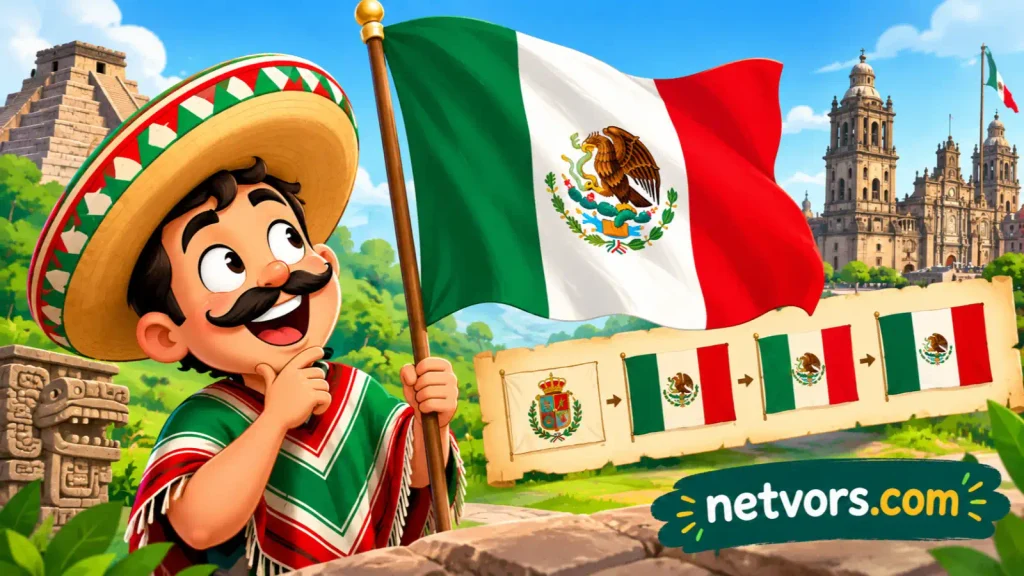
The Mexican flag did not appear in its current form overnight. Its design evolved through independence movements, political changes, and efforts to define a shared national identity.
1810 — The Independence Movement
The priest Miguel Hidalgo used an image of the Virgin of Guadalupe as a banner during the early independence movement. Although it was not the modern Mexican tricolor, it became an important historical symbol of the struggle against Spanish rule.
1821 — The Three Guarantees Flag
The Army of the Three Guarantees adopted green, white, and red stripes during the movement that brought Mexican independence to completion. The colors appeared diagonally, and the flag’s symbolism reflected the political principles of the period.
1822 — Vertical Stripes
During the First Mexican Empire, the tricolor stripes became vertical. The flag also displayed a crowned eagle, reflecting the country’s imperial government at the time.
19th Century — A Changing National Emblem
Different governments modified the eagle, its posture, and the surrounding details. The three colors remained a recognizable feature, even as Mexico experienced major political transformations.
1916 — The Eagle in Profile
President Venustiano Carranza issued a decree on September 20, 1916, establishing an emblem with the eagle shown in profile and holding a snake. This helped establish the design tradition recognizable in the modern coat of arms.
1968 — The Current Flag
Mexico officially adopted the specifications of its current flag design in 1968. The familiar vertical green, white, and red stripes and central national emblem became the standardized national flag used today.
This timeline follows the historical overview published by Mexico’s Secretariat of Foreign Affairs.
Gob México
When Did Mexico Adopt Its Current Flag?
The current flag design was officially adopted in 1968. However, several of its most recognizable features are much older: the tricolor dates to 1821, and the eagle-and-cactus imagery appeared in earlier independence-era flags.
That distinction is important. The current flag is the result of a long historical process, not a design invented entirely in 1968.
Mexico also observes Flag Day on February 24, commemorating the national emblem and its historical importance.
Gob México
How the Flag Is Used Today

The Mexican flag serves as a national symbol in public life, education, sports, cultural events, and celebrations.
National holidays and ceremonies
The flag is prominently displayed during Independence Day celebrations in September, Flag Day on February 24, and official ceremonies. Its presence reinforces the connection between contemporary Mexico and its history.
Sporting events
At international football matches and other sporting competitions, Mexican supporters often wave the flag to express national pride and solidarity with their team.
Cultural identity
The flag appears in artwork, clothing, decorations, and community celebrations. For people living abroad, it can also express a connection to Mexican heritage, family, language, or hometown.
Respectful display
The Mexican flag is a national emblem governed by rules concerning its appearance and use. For formal displays, ceremonies, and official reproductions, follow the applicable Mexican national-symbol regulations rather than treating the flag as an ordinary decorative graphic.
Gob México
Mexico Flag Emoji
Green, white, red, and the national coat of arms
The Mexican flag emoji 🇲🇽 generally represents Mexico, Mexican identity, national pride, or a connection to Mexican culture.
Unlike slang abbreviations that develop new meanings on social media, the flag emoji primarily retains its geographic and national meaning. Its interpretation depends on the surrounding message.
Common Uses of 🇲🇽
- Travel: “Mexico City next week! 🇲🇽”
- Football: “Vamos, México! 🇲🇽⚽”
- Heritage: “Celebrating my Mexican roots 🇲🇽❤️”
- Food and culture: “Tacos, music, and good company 🇲🇽🌮”
- Independence Day: “Celebrating Mexico’s history and traditions 🇲🇽”
The emoji may appear in Instagram bios, TikTok captions, WhatsApp messages, gaming profiles, and other online conversations.
Does the Mexico Flag Emoji Mean Something Different in Texting?
Usually, no. It is not a widely established abbreviation for a hidden phrase or secret message.
A person might use it to identify their nationality, show support for a Mexican sports team, or celebrate a cultural event. If someone combines 🇲🇽 with other emojis, the additional symbols may change the tone, but the flag itself still points to Mexico.
Common Misconceptions About the Mexican Flag
Even a familiar national flag can be misunderstood. Here are three common mistakes worth avoiding.
1. Assuming the colors have always meant the same thing
The colors’ original associations were linked to religion, independence, and union. Their modern civic interpretations developed later. Treating both interpretations as identical overlooks an important part of Mexican history.
Gob México
2. Thinking the flag was first created in 1968
The current design was standardized in 1968, but the tricolor dates back to 1821. The eagle and cactus also have historical roots predating the modern flag.
3. Assuming the eagle and snake are merely decorative
The central emblem is one of the most historically significant parts of the design. It recalls the Mexica founding legend associated with Tenochtitlan and links the national symbol to Indigenous history.
Gob México
Related Flags, Symbols, and Terms
If you’re researching the Mexico flag meaning, these related topics can help you understand its wider historical and cultural context.
| Related term | Meaning or connection |
|---|---|
| Mexican coat of arms | The central emblem featuring the eagle, snake, cactus, and other elements. |
| Mexica | The people associated with the founding of Tenochtitlan and the Aztec Empire. |
| Tenochtitlan | The historical Mexica capital located where central Mexico City developed. |
| Huitzilopochtli | A major Mexica deity associated with the founding legend. |
| Mexican Independence Day | A national celebration commemorating the independence movement. |
| Día de la Bandera | Mexico’s National Flag Day, celebrated on February 24. |
| Mexican national anthem | One of Mexico’s principal national symbols alongside its flag and coat of arms. |
| Nopal | The prickly pear cactus featured in the national emblem. |
| Tricolor flag | A flag featuring three colors; in Mexico’s case, green, white, and red. |
| Flag of Italy | Another green-white-red vertical tricolor, but with a different central design and historical meaning. |
Mexico Flag vs. Italy Flag: What’s the Difference?
Mexico 🇲🇽
Green, white, and red vertical stripes with a detailed national coat of arms in the center.
Italy 🇮🇹
Green, white, and red vertical stripes without a central emblem on the standard national flag.
The two flags share the same basic color order, which can cause confusion in small images or at a glance. The central eagle-and-snake emblem is the clearest distinguishing feature of the Mexican flag.
Their shared colors do not mean the countries share the same national symbolism or history.
Frequently Asked Questions About the Mexico Flag Meaning
1. What do the three colors of the Mexican flag mean?
The Mexican flag’s green, white, and red stripes are commonly associated with hope, unity, and the blood of national heroes. These are the modern civic interpretations. When the tricolor was introduced in 1821, its colors were associated with religion, independence, and union, reflecting the political principles of that period.
Gob México
2. What does the eagle and snake mean on the Mexican flag?
The eagle and snake refer to the traditional Mexica founding legend of Tenochtitlan. According to the story, the Mexica found an eagle perched on a cactus in a lake, a sign associated with where they should establish their city. The scene became an enduring national emblem that connects Mexico’s modern identity with its Indigenous past.
3. Why does the Mexican flag have a cactus?
The prickly pear cactus, known as nopal, is part of the founding legend represented in Mexico’s coat of arms. The eagle stands on the cactus as it grows from a rocky formation surrounded by water. These details connect the flag to the traditional account of the founding of Tenochtitlan, the historical city associated with modern Mexico City.
Gob México
4. When was the Mexican flag first created?
The green, white, and red tricolor was adopted by the Army of the Three Guarantees in 1821 during Mexico’s independence movement. The flag’s design changed over the following decades. The specifications of the current national flag were officially adopted in 1968, building on earlier versions and the established eagle-and-snake emblem.
Gob México
5. What does the Mexican flag emoji 🇲🇽 mean?
The 🇲🇽 emoji represents Mexico, Mexican nationality, cultural heritage, or national pride. People use it in travel posts, sports conversations, social media bios, and messages celebrating Mexican traditions. It is not generally a slang abbreviation with a hidden definition; its exact meaning depends on the message and context in which it appears.
6. Why is February 24 important in Mexico?
February 24 is celebrated as Día de la Bandera, or National Flag Day. It recognizes the Mexican flag as a national symbol and commemorates its place in the country’s history. Schools, public institutions, and official ceremonies may mark the occasion with flag displays and educational activities.
Gob México
7. Is the Mexican flag similar to the Italian flag?
Yes. Both national flags feature vertical green, white, and red stripes. However, Mexico’s flag includes a detailed coat of arms in the center of the white stripe, while Italy’s standard national flag has no central emblem. Their colors also have distinct historical contexts and national associations.
8. What is the official name of the Mexican flag in Spanish?
It is called the Bandera Nacional de México, meaning the National Flag of Mexico. The central emblem is known as the Escudo Nacional, or National Coat of Arms. These terms are useful when researching official Mexican government sources or learning about the country’s national symbols.
Conclusion:
The Mexican flag tells a story that stretches from an ancient founding legend to the creation of a modern nation. Its green, white, and red stripes represent hope, unity, and sacrifice in their widely recognized modern interpretation, while the central eagle, snake, and cactus connect the design to Mexico’s Indigenous heritage.
Understanding the Mexico flag meaning also means recognizing how its symbolism evolved. The flag’s history includes independence, changing governments, and the development of a national identity that continues to matter to Mexicans today.
Next time you see 🇲🇽, you’ll know there is more to it than three colors. It is a national emblem shaped by history, tradition, and cultural pride.
Want to explore more national symbols? Share this guide with someone learning about Mexico, or explore the history and symbolism of other national flags.

Hi, I’m John Cate, the voice behind Netvors.com, where I turn confusing words into clear meaning.
I’ve always been fascinated by how language evolves. One day a word means one thing, the next day it means something completely different, especially online. That shift is exactly what inspired me to build Netvors: a space where meanings are simple, accurate, and actually useful.