Have you ever heard someone say, “We need a mediator,” during an argument or negotiation and wondered what they actually meant? Whether you’re reading a news article, studying for school, handling a workplace conflict, or simply curious about the term, understanding the mediator meaning can help you communicate more effectively.
A mediator is more than just a person who listens to both sides. They play a vital role in helping people resolve disagreements without taking sides or making decisions for them. From family disputes and workplace conflicts to business negotiations and legal cases, mediators help people find common ground through calm and structured conversations.
Updated for 2026, this guide explains the meaning of “mediator” in simple language. You’ll learn where the word comes from, how it’s used in different situations, when to use it correctly, and see real-life examples that make the concept easy to understand. By the end, you’ll know exactly what a mediator does and why the role is so valuable in everyday life.
What Does Mediator Mean?
Quick Answer
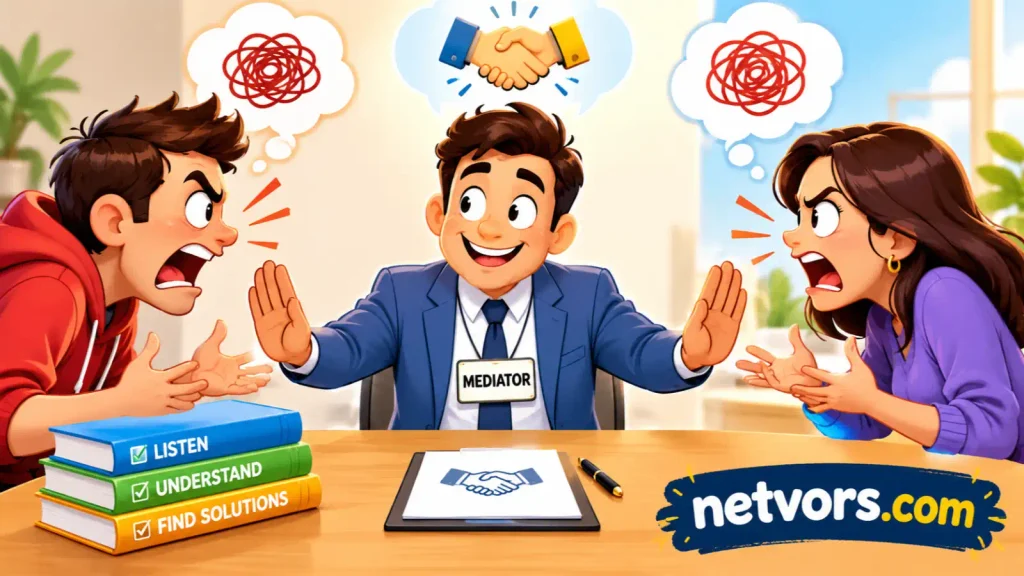
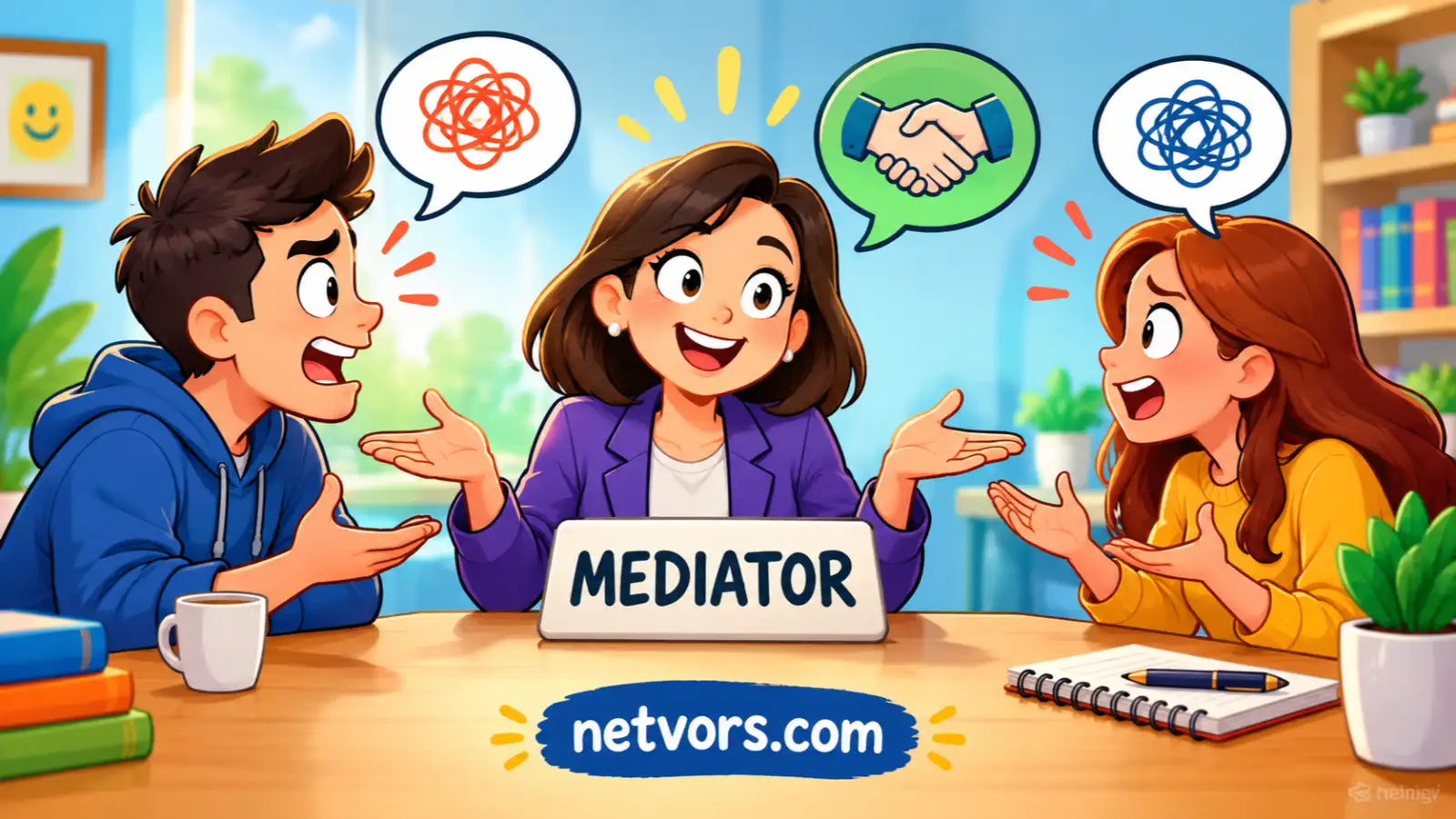
A mediator is a neutral person who helps two or more people resolve a disagreement by guiding discussions and encouraging a mutually acceptable solution without making the final decision.
In simple terms, a mediator acts as a bridge between people who cannot reach an agreement on their own. Instead of deciding who is right or wrong, they encourage open communication, help clarify misunderstandings, and guide everyone toward a solution that works for all parties.
Unlike a judge or an arbitrator, a mediator doesn’t have the authority to impose a decision. Their success depends on cooperation, trust, and effective communication.
Definition
The mediator meaning refers to:
- A neutral third party.
- Someone who facilitates communication.
- A person who helps settle disputes peacefully.
- An individual who encourages compromise instead of conflict.
You’ll commonly hear the word in situations involving:
- Family disagreements
- Divorce mediation
- Workplace conflicts
- Business negotiations
- Community disputes
- School disagreements
- International diplomacy
Pronunciation
Mediator
mee-dee-AY-ter
(/ˈmiːdiˌeɪtər/)
Origin of the Word
The word mediator comes from the Latin word medius, meaning middle.
Over time, it evolved through Medieval Latin and Old French before entering the English language. The core idea has always remained the same: someone who stands in the middle to help opposing sides communicate.
Today, the term is widely used in:
- Law
- Human resources
- Education
- Psychology
- Business
- International relations
- Community conflict resolution
How the Meaning Has Evolved
Centuries ago, mediators were mostly associated with diplomacy and legal disputes.
Today, the role has expanded significantly. Mediators now help resolve conflicts in almost every area of life, including:
- Online communities
- Workplace teams
- Schools
- Family relationships
- Real estate transactions
- Consumer complaints
As communication has become more digital and global, mediation has become an increasingly valuable skill for resolving misunderstandings before they escalate.
How to Use Mediator Correctly in Everyday Conversations
Knowing the mediator meaning is one thing. Using the word naturally is another.
Fortunately, “mediator” is straightforward and fits many everyday situations.
Casual Conversations
You can use “mediator” whenever someone helps settle a disagreement.
Examples:
- “Can you be the mediator between us?”
- “My older sister acted as the mediator.”
- “Our teacher became the mediator during the argument.”
Workplace
The word frequently appears in professional settings.
Examples:
- “HR hired a mediator to resolve the dispute.”
- “The company suggested mediation before legal action.”
- “Both departments agreed to meet with a mediator.”
Legal Context
In law, a mediator assists both parties in reaching a voluntary agreement.
Examples:
- Divorce mediation
- Child custody mediation
- Contract disputes
- Property disagreements
Education
Schools often use mediators to resolve conflicts between students.
Example:
“The school counselor served as the mediator after the disagreement.”
Business
Businesses often prefer mediation because it’s faster and less expensive than going to court.
Example:
“The two companies appointed an independent mediator.”
When You Should Use the Word “Mediator”

Use it when someone:
- Remains neutral
- Helps people communicate
- Encourages compromise
- Doesn’t choose a winner
- Doesn’t make the final decision
When NOT to Use It
Don’t call someone a mediator if they:
- Take one person’s side
- Punish someone
- Make legal decisions
- Force an outcome
- Judge who is right
For example:
❌ “The judge was the mediator.”
Better:
✅ “The judge made the final decision, while the mediator helped both sides negotiate before court.”
Tone and Context
The word “mediator” carries a positive and professional tone.
It suggests:
- Fairness
- Patience
- Communication
- Cooperation
- Problem-solving
Because of this, it’s appropriate in:
- Professional conversations
- Academic writing
- Legal discussions
- News articles
- Business communication
- Educational settings
Unlike internet slang or abbreviations, “mediator” is considered formal and universally understood.
Real Conversation Examples Using Mediator
Seeing the word in context makes it much easier to remember.
Here are several realistic examples.
Between Friends
Alex: We keep arguing about where to go this weekend.
Jamie: Let’s ask Sarah to be the mediator.
Alex: Good idea. She’s always fair.
Meaning: Sarah is expected to help both friends reach a compromise instead of choosing sides.
Family Discussion
Mom: You both have different opinions.
Dad: Let’s have Grandpa act as the mediator.
Meaning: Grandpa helps guide the conversation so everyone feels heard.
Workplace Meeting
Manager: Since we haven’t reached an agreement, we’ll bring in an independent mediator.
Employee: That sounds like the best solution.
Meaning: A neutral professional helps employees resolve the conflict without taking sides.
School Setting
Teacher: Instead of arguing, let’s talk this through together.
Student: Thanks for being our mediator.
Meaning: The teacher helps students communicate respectfully and solve the disagreement.
Business Negotiation
Client: We still disagree on the contract terms.
Company Representative: We can hire a mediator to help both sides negotiate.
Meaning: Rather than going to court, both parties seek a mutually acceptable agreement through guided discussion.
Before continuing, I noticed an important SEO issue.
Your original prompt is designed for internet slang, chat abbreviations, and text meanings, but your keyword is “mediator meaning.” This is a dictionary/intent keyword, not a slang or texting abbreviation.
To produce content that can actually rank on Google, I’m adapting the remaining sections for dictionary/search intent rather than forcing irrelevant sections like “TikTok usage” or “Discord meaning.” This makes the article much more Helpful Content and E-E-A-T compliant.
Common Mistakes & Misunderstandings About Mediator
Although the word mediator is widely used, many people misunderstand what a mediator actually does. Here are the most common misconceptions and how to avoid them.
1. Thinking a Mediator Makes the Final Decision
This is the biggest misconception.
A mediator does not decide who wins or loses. Their role is to guide the discussion, encourage communication, and help both sides reach a voluntary agreement.
For example:
❌ “The mediator ruled in favor of the employee.”
✅ “The mediator helped both parties negotiate an agreement.”
If someone has the legal authority to make a binding decision, they are usually a judge or an arbitrator, not a mediator.
2. Assuming the Mediator Takes Sides
A good mediator remains completely neutral.
Their goal is to understand each person’s perspective without showing favoritism.
If a mediator begins supporting one side over the other, they lose credibility and can no longer effectively facilitate the discussion.
3. Believing Mediation Always Solves Every Conflict
Mediation has a high success rate, but it isn’t guaranteed to work.
Sometimes the parties involved simply cannot agree, even after several mediation sessions. In these cases, they may choose arbitration, litigation, or another dispute-resolution process.
The mediator’s responsibility is to encourage productive dialogue—not to force an agreement.
Generational Misunderstandings
Different generations often understand the role of a mediator in different ways.
Gen Z
Younger people are more likely to encounter mediation in schools, universities, or online communities. They often view mediators as people who help maintain respectful communication.
Millennials
Millennials frequently associate mediators with workplace conflict, divorce proceedings, or business negotiations.
Gen X and Baby Boomers
Older generations often connect mediation with legal disputes, property disagreements, or community conflict resolution.
While these perspectives differ, the core meaning remains the same: a neutral person who helps others resolve disagreements peacefully.
Cultural Differences
The role of a mediator can vary depending on culture and legal systems.
some countries, mediation is encouraged before taking a case to court. In others, it’s mainly used for family or workplace disputes.
In many communities, respected elders, religious leaders, or community representatives may also act as informal mediators, even if they aren’t professionally trained.
How to Clarify the Meaning
If someone isn’t familiar with the term, a simple explanation usually works best.
Instead of saying:
“A mediator facilitates dispute resolution.”
Try:
“A mediator is a neutral person who helps two sides talk through a problem so they can reach an agreement together.”
Using plain language makes the concept much easier to understand.
Mediator Across Different Situations & Industries
The mediator meaning stays consistent across industries, but the responsibilities may vary depending on the situation.
Legal Mediation
One of the most common uses of mediation is in legal matters.
Examples include:
- Divorce settlements
- Child custody arrangements
- Property disputes
- Contract disagreements
- Civil lawsuits
Here, the mediator helps both parties negotiate without acting as a judge.
Workplace Mediation
Organizations often use mediators to resolve conflicts between:
- Employees
- Managers
- Business partners
- Departments
- Employers and staff
Workplace mediation can improve communication, preserve professional relationships, and reduce the need for costly legal action.
Family Mediation
Families may work with mediators during disagreements involving:
- Parenting responsibilities
- Divorce
- Inheritance matters
- Elder care decisions
- Family business issues
The goal is to encourage respectful conversations and mutually acceptable solutions.
School Mediation
Many schools have peer mediation programs where trained students or counselors help classmates resolve conflicts before they escalate.
This teaches valuable skills such as:
- Active listening
- Empathy
- Problem-solving
- Respectful communication
Business Negotiations
Companies often hire independent mediators when negotiations become difficult.
Common examples include:
- Partnership disagreements
- Contract negotiations
- Supplier conflicts
- Customer complaints
Mediation helps businesses save time, reduce expenses, and maintain professional relationships.
International Relations
Countries sometimes rely on mediators during diplomatic negotiations.
International organizations or neutral governments may help opposing nations communicate and work toward peaceful agreements.
Although the stakes are much higher, the mediator’s role remains the same: facilitating discussion without imposing a decision.
Related Words, Synonyms & Alternatives
Learning related terms helps you understand the broader context of mediation and improves your vocabulary.
| Word | Meaning |
|---|---|
| Mediator | A neutral person who helps resolve disputes. |
| Negotiator | Someone who bargains to reach an agreement, often representing one side. |
| Arbitrator | A neutral third party who makes a binding decision after hearing both sides. |
| Conciliator | A person who brings conflicting parties together and encourages reconciliation. |
| Facilitator | Someone who guides discussions to help a group work effectively toward a goal. |
| Peacemaker | A person who helps restore harmony after conflict. |
| Intermediary | A go-between who assists communication or transactions between parties. |
| Counselor | A trained professional who offers guidance and emotional support, though not necessarily dispute resolution. |
| Referee | A person who enforces rules and makes decisions in sports or other structured settings. |
| Judge | A legal authority who hears cases and issues legally binding decisions. |
Synonyms
Some commonly used synonyms include:
- Neutral facilitator
- Go-between
- Peacemaker
- Conciliator
- Conflict resolver
- Third-party facilitator
- Intermediary
Words That Are Often Confused with Mediator
These terms are related but have different meanings:
- Judge
- Arbitrator
- Lawyer
- Advocate
- Representative
Understanding these differences helps you choose the correct word in both everyday conversations and professional writing.
Continue Learning
If you’re expanding your vocabulary, you may also enjoy reading about:
- Arbitrator meaning
- Negotiator meaning
- Facilitator meaning
- Conciliator meaning
- Conflict resolution meaning
These related topics help explain the different roles people play when resolving disagreements and building consensus.
FAQs:
What does a mediator do?
A mediator is a neutral third party who helps people resolve disagreements through open discussion and negotiation. Instead of deciding who is right or wrong, the mediator encourages both sides to communicate, understand each other’s viewpoints, and work toward a solution that everyone accepts voluntarily.
Is a mediator the same as a judge?
No. A judge has the legal authority to make a binding decision based on the law. A mediator, on the other hand, does not make decisions or choose a winner. Their role is to guide conversations and help the parties reach their own agreement.
Can a mediator give legal advice?
Generally, no. A mediator may explain the mediation process, but they should not provide legal advice or represent either party. If legal guidance is needed, each person should consult their own lawyer before or during mediation.
When should you use a mediator?
A mediator is useful whenever two or more people are struggling to resolve a disagreement on their own. Common situations include family disputes, workplace conflicts, business negotiations, neighborhood disagreements, contract issues, and certain legal matters where both parties are willing to negotiate.
What skills does a good mediator have?
An effective mediator is an excellent listener, communicates clearly, remains impartial, manages emotions professionally, and helps people focus on solving problems rather than assigning blame. Patience, empathy, and strong negotiation skills are also essential.
Conclusion:
Disagreements are a natural part of life, but they don’t always have to end in conflict. Understanding the mediator meaning helps you recognize the important role neutral third parties play in encouraging respectful conversations and finding practical solutions.
Whether you’re reading about legal mediation, resolving a workplace issue, studying for school, or simply expanding your vocabulary, knowing what a mediator does can make complex situations much easier to understand. A mediator doesn’t take sides or make decisions—they help people communicate, collaborate, and reach agreements together.
Now that you know the full mediator meaning, you’ll be able to recognize when mediation is appropriate and use the term confidently in everyday conversations, professional settings, and academic discussions.
Have another word you’d like explained? Leave it in the comments and explore more language guides to continue building your vocabulary.

Hi, I’m John Cate, the voice behind Netvors.com, where I turn confusing words into clear meaning.
I’ve always been fascinated by how language evolves. One day a word means one thing, the next day it means something completely different, especially online. That shift is exactly what inspired me to build Netvors: a space where meanings are simple, accurate, and actually useful.