Suddenly, you’re wondering whether it’s a sign of a urinary tract infection, kidney disease, or something more serious.
The good news? A trace leukocyte esterase result doesn’t automatically mean you have a major health problem. In fact, it’s one of the most commonly misunderstood findings on a routine urinalysis. Sometimes it points to a mild infection, while other times it’s simply caused by sample contamination or temporary inflammation.
Understanding leukocyte esterase trace meaning can help you avoid unnecessary worry while knowing when it’s important to seek medical advice. The key is interpreting the result alongside your symptoms, medical history, and other urine test findings not in isolation.
Updated for 2026, this guide explains what trace leukocyte esterase means, why it appears on a urine test, the most common causes, when it’s normal, and what doctors typically recommend next.
What Does “Leukocyte Esterase Trace” Mean?
Quick Answer:
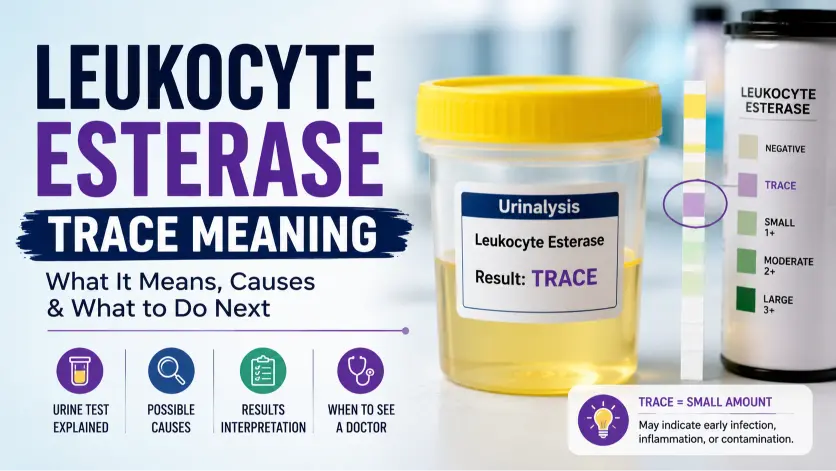
Trace leukocyte esterase means your urine contains a small amount of leukocyte esterase, an enzyme produced by white blood cells. This usually suggests that a few white blood cells are present in the urine, which can happen because of a mild infection, inflammation, or contamination during sample collection.
Breaking Down the Term
When a laboratory performs a urine dipstick test, one of the markers it checks is leukocyte esterase. If the strip changes color, it means white blood cells are present in the urine.
A trace result is the lowest positive level and usually indicates only a small number of these cells.
What Is Leukocyte Esterase?
Leukocyte esterase is an enzyme naturally found inside white blood cells, also called leukocytes.
White blood cells are part of your immune system. Their job is to fight:
- Bacterial infections
- Viral infections
- Fungal infections
- Inflammation
- Foreign organisms
When these cells enter the urinary tract, they release leukocyte esterase, which can be detected during a routine urinalysis.
Rather than measuring the white blood cells directly, the urine dipstick identifies this enzyme as an indicator that white blood cells are present.
Why Is Leukocyte Esterase Tested?

Healthcare providers commonly include leukocyte esterase in a standard urinalysis because it’s a quick way to screen for urinary tract problems.
The test helps evaluate:
- Urinary tract infections (UTIs)
- Kidney infections
- Bladder inflammation
- Kidney diseases
- Pregnancy-related urinary infections
- Routine health screenings
- Pre surgical evaluations
It’s inexpensive, fast, and provides valuable clues before more detailed laboratory tests are performed.
How the Urine Test Works

A urine dipstick contains several small chemical pads.
Each pad checks for a different substance, including:
| Test Marker | What It Indicates |
|---|---|
| Leukocyte esterase | White blood cells |
| Nitrites | Certain bacteria |
| Blood | Bleeding or irritation |
| Protein | Kidney problems |
| Glucose | Diabetes |
| Ketones | Fat metabolism |
| pH | Urine acidity |
| Specific gravity | Hydration level |
Understanding Trace Results
Urine laboratories often report leukocyte esterase using categories such as:
| Result | Meaning |
|---|---|
| Negative | No leukocyte esterase detected |
| Trace | Small amount detected |
| 1+ | Mild positive |
| 2+ | Moderate positive |
| 3+ | Strong positive |
A trace result is generally less concerning than higher positive levels. However, it still deserves attention if you have urinary symptoms or other abnormal test findings.
Does Trace Leukocyte Esterase Always Mean Infection?
No.
This is one of the biggest misconceptions.
Many people assume any positive urine test automatically means they have a UTI. In reality, trace leukocyte esterase can occur for several reasons, including:
- A mild urinary tract infection
- Temporary inflammation
- Vaginal contamination during sample collection
- Recent vigorous exercise
- Kidney stones
- Certain medications
- Pregnancy-related urinary changes
That’s why doctors rarely diagnose a UTI based on leukocyte esterase alone.
How Doctors Interpret the Result
Healthcare providers consider several factors before making a diagnosis.
These include:
Your Symptoms
For example:
- Burning during urination
- Frequent urination
- Urgent need to urinate
- Pelvic discomfort
- Fever
- Back or side pain
Symptoms often provide more useful information than the urine strip alone.
Nitrite Results
If both nitrites and leukocyte esterase are positive, the likelihood of a bacterial UTI increases significantly.
However, some bacteria don’t produce nitrites, so a negative nitrite test doesn’t completely rule out infection.
White Blood Cell Count Under the Microscope
A laboratory may also examine urine under a microscope to count:
- White blood cells (WBCs)
- Red blood cells
- Bacteria
- Crystals
- Casts
This microscopic examination provides stronger evidence than the dipstick test alone.
Urine Culture
If infection is suspected, your healthcare provider may order a urine culture.
A urine culture:
- Identifies the exact bacteria causing the infection
- Measures bacterial growth
- Determines which antibiotics are most effective
Because of this, a urine culture is considered the gold standard for confirming many urinary tract infections.
Can a Healthy Person Have Trace Leukocyte Esterase?
Yes.
A healthy individual can occasionally have a trace result without any illness.
Possible reasons include:
- Minor contamination during sample collection
- Temporary immune activity
- Mild dehydration
- Recent physical activity
- No identifiable medical cause
If you have no symptoms and all other urine findings are normal, your doctor may simply recommend repeating the test later rather than starting treatment immediately.
Key Takeaways
- Leukocyte esterase is an enzyme released by white blood cells.
- A trace result means only a small amount was detected.
- It may indicate infection, inflammation, or sample contamination.
- A trace result alone does not confirm a urinary tract infection.
- Doctors interpret it together with symptoms, urine microscopy, nitrites, and urine culture results.
Common Causes of Leukocyte Esterase Trace Results
A trace leukocyte esterase result can happen for several reasons. Some are harmless and temporary, while others require medical attention. Understanding the possible causes helps explain why doctors rarely rely on this test result alone.
1. Urinary Tract Infection (UTI)
The most common cause of leukocyte esterase in urine is a urinary tract infection (UTI).
When bacteria enter the urinary tract, your immune system sends white blood cells to fight the infection. These cells release leukocyte esterase, which appears on the urine dipstick.
Common UTI Symptoms
- Burning during urination
- Frequent urge to urinate
- Passing only small amounts of urine
- Cloudy urine
- Strong-smelling urine
- Lower abdominal pain
- Blood in the urine (sometimes)
If you have these symptoms along with trace leukocyte esterase, your healthcare provider may recommend a urine culture to confirm the infection.
2. Sample Contamination
Not every trace result means something is wrong.
Sometimes the urine sample becomes contaminated before it reaches the laboratory.
Common sources of contamination include:
- Vaginal secretions
- Menstrual blood
- Skin bacteria
- Improper collection technique
This is one reason doctors often ask for a clean-catch midstream urine sample.
Tips for Collecting a Clean Sample
- Wash your hands first.
- Clean the genital area with provided wipes.
- Begin urinating into the toilet.
- Collect the middle portion of urine.
- Avoid touching the inside of the container.
A properly collected sample reduces the chance of a false-positive result.
3. Kidney Infection (Pyelonephritis)
A kidney infection is a more serious form of a UTI.
Instead of staying in the bladder, bacteria travel upward to infect one or both kidneys.
Symptoms often include:
- High fever
- Chills
- Side or back pain
- Nausea
- Vomiting
- Fatigue
- Painful urination
Kidney infections usually produce more than just a trace amount of leukocyte esterase, but early infections may begin with mild findings.
4. Kidney Stones
Kidney stones can irritate the urinary tract and trigger inflammation.
As white blood cells respond to this irritation, leukocyte esterase may appear in the urine even when no infection is present.
Symptoms may include:
- Severe side pain
- Pain that moves toward the groin
- Blood in urine
- Nausea
- Vomiting
Doctors often combine urine testing with imaging studies when kidney stones are suspected.
5. Bladder Inflammation (Cystitis)
Inflammation of the bladder isn’t always caused by bacteria.
It may result from:
- Chemical irritation
- Certain medications
- Radiation therapy
- Interstitial cystitis (painful bladder syndrome)
Because inflammation attracts white blood cells, leukocyte esterase may be detected.
6. Sexually Transmitted Infections (STIs)
Certain sexually transmitted infections can cause white blood cells to appear in urine.
Examples include:
- Chlamydia
- Gonorrhea
In these cases, people may have:
- Pain during urination
- Unusual discharge
- Pelvic pain
- Burning sensation
Additional laboratory tests are usually needed because a standard urine dipstick cannot identify the specific infection.
7. Recent Exercise
Intense physical activity can temporarily increase white blood cells in urine.
Long-distance runners and endurance athletes occasionally show mild urine abnormalities after strenuous exercise.
The result often returns to normal after adequate rest and hydration.
8. Certain Medications
Some medications may affect urine test results or contribute to urinary inflammation.
Examples include:
- Certain antibiotics
- Nonsteroidal anti-inflammatory drugs (NSAIDs)
- Chemotherapy medications
Never stop taking prescribed medication based solely on a urine dipstick result. Discuss any concerns with your healthcare provider.
Symptoms That May Accompany Trace Leukocyte Esterase
A trace result by itself doesn’t cause symptoms.
Instead, symptoms come from the underlying condition.
Watch for signs such as:
- Painful urination
- Frequent urination
- Urgent need to urinate
- Cloudy urine
- Foul-smelling urine
- Blood in urine
- Pelvic pain
- Fever
- Chills
- Back pain
Leukocyte Esterase Trace During Pregnancy
Pregnancy deserves special attention because urinary infections are more common and can affect both the mother and baby if left untreated.
Finding trace leukocyte esterase during pregnancy does not automatically mean you have an infection.
Possible explanations include:
- Mild contamination
- Hormonal changes
- Increased vaginal discharge
- Early urinary tract infection
Because untreated UTIs can increase the risk of kidney infection, preterm labor, and other complications, healthcare providers often perform additional testing.
They may order:
- Repeat urinalysis
- Urine microscopy
- Urine culture
Never self medicate during pregnancy. Follow your obstetric provider’s recommendations if an abnormal urine test is reported.
Leukocyte Esterase Trace Without Symptoms
Many people are surprised to learn they have trace leukocyte esterase during a routine physical because they feel perfectly healthy.
Possible explanations include:
Treatment isn’t always necessary.
How Doctors Diagnose the Cause
A urine dipstick is only the first step.
To determine why leukocyte esterase is present, healthcare providers may use several additional tests.
A laboratory examines urine under a microscope to identify:
- White blood cells
- Red blood cells
- Bacteria
- Crystals
- Casts
- Yeast
This helps confirm whether inflammation or infection is actually present.
Urine Culture
A urine culture identifies bacteria growing in the urine.
It can:
- Confirm infection
- Identify the exact bacteria
- Determine which antibiotics will work best
Culture results usually take 24 to 72 hours.
Physical Examination
Your healthcare provider may ask about:
- Urinary symptoms
- Fever
- Pregnancy
- Kidney stone history
- Sexual history
- Recent medications
These details help determine whether additional testing is needed.
Imaging Tests
If kidney stones, structural abnormalities, or recurrent infections are suspected, imaging studies may include:
- Ultrasound
- CT scan
- MRI (less commonly)
These tests help identify problems that a urine test cannot detect.
Treatment for Trace Leukocyte Esterase
Treatment depends entirely on the underlying cause—not the urine test result itself.
If It’s a UTI
Treatment may include:
- Antibiotics
- Increased fluid intake
- Pain relief medications (when appropriate)
- Follow-up urine testing if symptoms persist
Always complete the full course of antibiotics if prescribed.
If the Sample Was Contaminated
Your provider may simply ask you to repeat the urine test using a proper clean-catch technique.
No medication is usually needed.
If Kidney Stones Are the Cause
Treatment varies depending on stone size and location.
Options may include:
- Drinking more water
- Pain medication
- Medications that help pass the stone
- Medical procedures for larger stones
Can You Prevent Trace Leukocyte Esterase?
While not every cause is preventable, healthy habits can lower your risk of urinary problems.
Helpful tips include:
- Drink plenty of water each day.
- Don’t hold your urine for long periods.
- Practice good personal hygiene.
- Urinate after sexual activity.
- Wipe from front to back after using the bathroom.
- Wear breathable cotton underwear.
- Manage diabetes if you have it.
- Follow your healthcare provider’s advice for recurrent UTIs.
These habits support urinary tract health and may reduce future infections.
When Should You See a Doctor?
Seek medical attention if your trace leukocyte esterase result is accompanied by:
- Fever
- Severe back or side pain
- Blood in the urine
- Persistent painful urination
- Pregnancy with urinary symptoms
- Symptoms lasting more than a day or two
- Recurrent urinary tract infections
FAQs:
H3: What does leukocyte esterase trace mean on a urine test?
A trace leukocyte esterase result means your urine contains a small amount of an enzyme released by white blood cells. This can indicate mild inflammation, an early urinary tract infection (UTI), or contamination during sample collection. By itself, a trace result doesn’t confirm a medical condition and should be interpreted alongside your symptoms and other urine test findings.
Is trace leukocyte esterase normal?
Yes, it can be. Some healthy people may have a trace amount of leukocyte esterase without any infection or disease. Temporary factors like exercise, mild irritation, or an improperly collected urine sample can also cause this result. If you have no symptoms, your healthcare provider may simply repeat the urinalysis.
Does trace leukocyte esterase always mean a UTI?
No. Although a urinary tract infection is one of the most common causes, a trace result isn’t enough to diagnose a UTI. Other possible causes include kidney stones, bladder inflammation, pregnancy-related changes, or contamination of the urine sample. A urine culture is often needed to confirm a bacterial infection.
Should I take antibiotics for trace leukocyte esterase?
Not necessarily. Antibiotics should only be taken when a healthcare provider confirms or strongly suspects a bacterial infection. Taking antibiotics unnecessarily can contribute to antibiotic resistance and may cause unwanted side effects. Never self-medicate based on a urine dipstick result alone.
Can dehydration cause trace leukocyte esterase?
Dehydration doesn’t directly produce leukocyte esterase, but it can make urine more concentrated. Concentrated urine may make certain abnormalities easier to detect and can sometimes irritate the urinary tract. Drinking enough fluids supports overall urinary health, but persistent abnormal results should still be evaluated by a healthcare provider.
Conclusion:
Seeing leukocyte esterase trace on a urine test can be unsettling, but it’s important to remember that a trace result is not a diagnosis. It simply indicates that a small number of white blood cells or the enzyme they produce were detected in your urine.
In many cases, the cause is something minor, such as a mild urinary tract infection, temporary inflammation, or even contamination during sample collection. However, when paired with symptoms like burning during urination, fever, or back pain, it may signal a condition that requires medical evaluation.
The best approach is to discuss your results with a healthcare provider rather than trying to interpret them in isolation. Additional tests, such as a urine culture or microscopic examination, can help determine whether treatment is needed.
If you found this guide helpful, explore our other health and medical terminology articles to better understand common lab results and medical conditions.

Hi, I’m John Cate, the voice behind Netvors.com, where I turn confusing words into clear meaning.
I’ve always been fascinated by how language evolves. One day a word means one thing, the next day it means something completely different, especially online. That shift is exactly what inspired me to build Netvors: a space where meanings are simple, accurate, and actually useful.