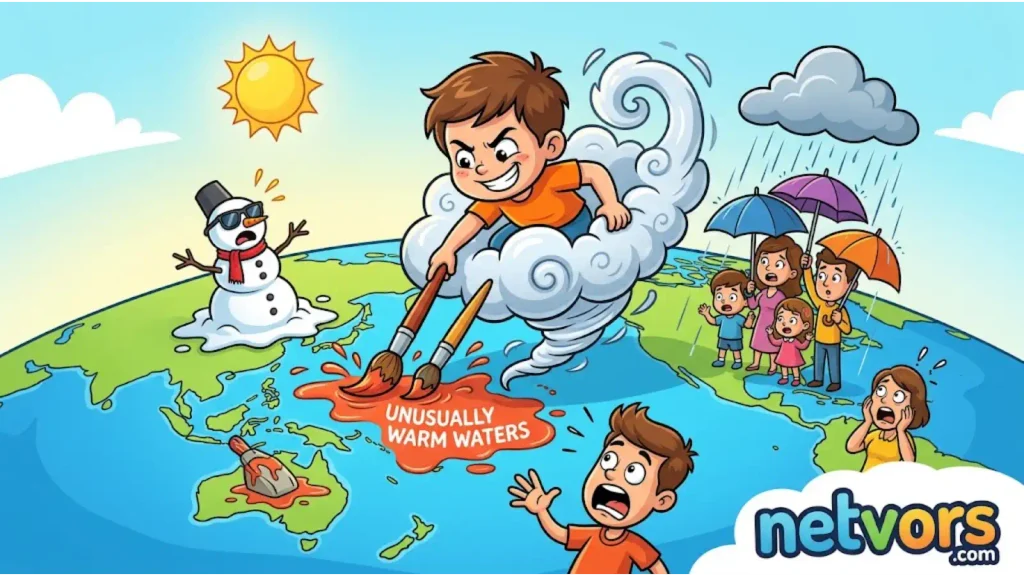
Have you ever heard a weather reporter say, “This year’s unusual weather may be linked to El Niño,” and wondered what that actually means?
You’re not alone. The term El Niño meaning is searched by millions of people whenever unusual heat, flooding, drought, or shifting weather patterns make headlines. While it may sound like the name of a storm, El Niño is actually a large-scale climate phenomenon that affects weather across the globe.
Understanding El Niño matters because its impacts can influence everything from food prices and farming to water supplies and extreme weather events. Whether you’re a student, weather enthusiast, traveler, or simply curious about climate science, knowing how El Niño works can help you better understand what’s happening around the world.
Updated for 2026, this guide explains the meaning of El Niño, its origins, causes, effects, real-world examples, and how it compares to La Niña.
Table of Contents
- What Does El Niño Mean?
- The Origin of the Term El Niño
- How El Niño Forms
- How El Niño Affects Global Weather
- Real-World Examples of El Niño
- Common Misunderstandings About El Niño
- El Niño Across Different Regions
- El Niño vs. La Niña
- Related Climate Terms
- Frequently Asked Questions
- Conclusion
What Does “El Niño” Mean?

Quick Answer
El Niño is the warm phase of a natural climate cycle called ENSO (El Niño–Southern Oscillation), during which ocean temperatures in the central and eastern Pacific Ocean become warmer than normal. This warming alters weather patterns around the world.
In simple terms, El Niño occurs when unusually warm ocean water develops across parts of the Pacific Ocean. Because oceans and the atmosphere constantly interact, this warming changes wind patterns, rainfall distribution, and temperatures across many countries.
Pronunciation
El Niño is pronounced:
el NEEN-yoh
The tilde (~) over the “ñ” changes the pronunciation from a standard “n” sound to a “ny” sound.
Origin of the Term
The phrase “El Niño” comes from Spanish and means “The Little Boy” or “The Christ Child.”
Peruvian fishermen noticed that unusually warm ocean waters often appeared around December, near Christmas. They named the phenomenon after the Christ Child. Over time, scientists adopted the term to describe this recurring climate event.
How the Meaning Has Evolved
Originally, El Niño referred to a local warming event near the coast of South America. Today, meteorologists use the term to describe a major climate pattern that can affect weather worldwide.
How El Nino Forms
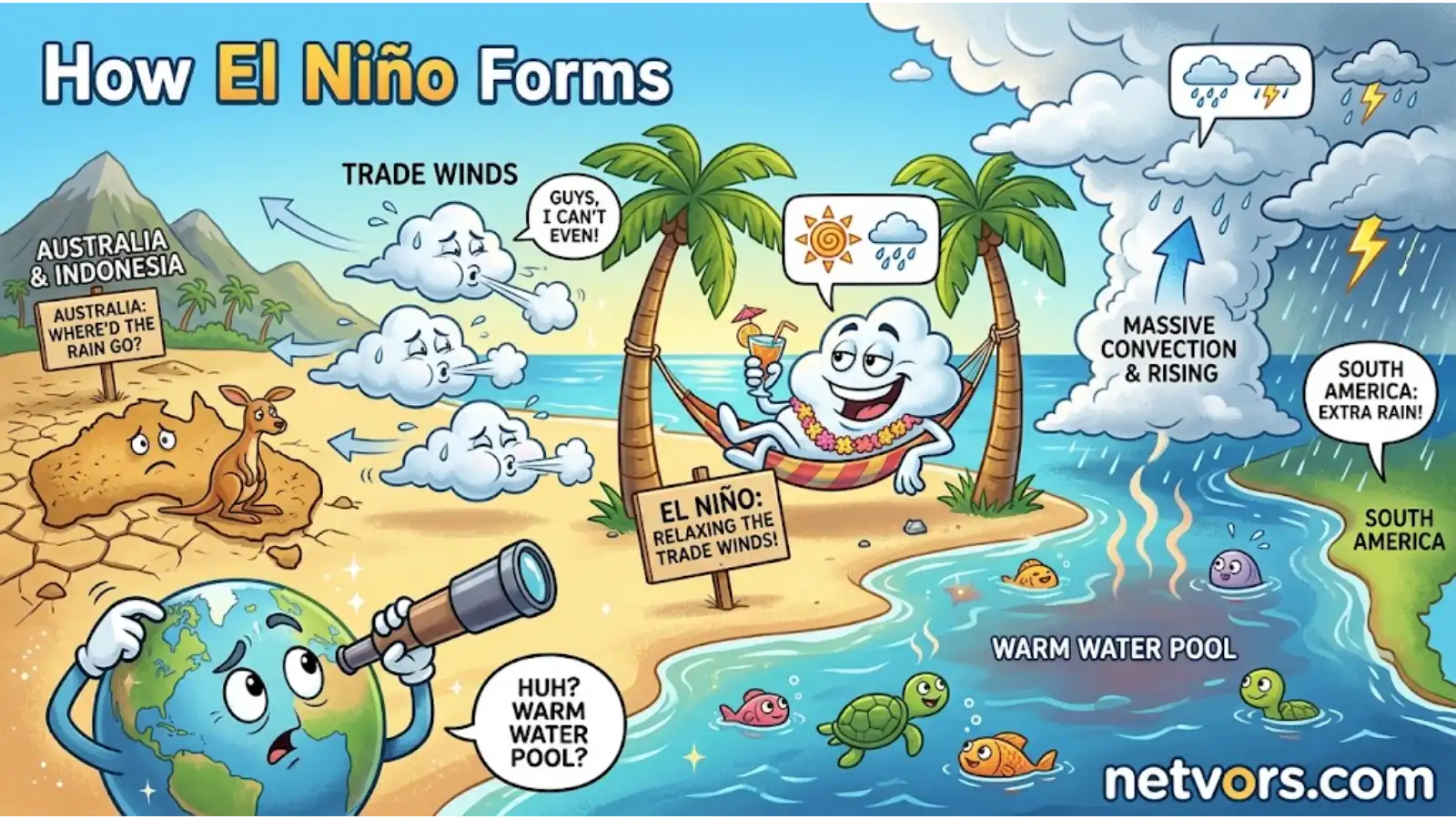
To understand the El Niño meaning, it helps to know how the Pacific Ocean normally behaves.
Normal Conditions
Under normal conditions:
- Trade winds blow from east to west across the Pacific.
- Warm water accumulates near Asia and Australia.
- Cooler water rises near South America.
- Rainfall is concentrated in the western Pacific.
During El Niño
When El Niño develops:
- Trade winds weaken or reverse.
- Warm water shifts eastward.
- Surface temperatures rise in the central and eastern Pacific.
- Rainfall patterns move eastward.
This chain reaction changes atmospheric circulation and influences weather thousands of miles away.
Why It Matters
The Pacific Ocean covers roughly one-third of Earth’s surface. Even small temperature changes across such a vast area can significantly affect global weather systems.
How El Niño Affects Global Weather
One reason people search for the el nino meaning is to understand why weather can seem unusually extreme during certain years.
Increased Rainfall in Some Areas
Regions that often experience wetter conditions during El Niño include:
- Western South America
- Parts of the southern United States
- East Africa
This can increase flood risks and landslides.
Drier Conditions Elsewhere
Some locations become significantly drier, including:
- Australia
- Indonesia
- Parts of Southeast Asia
These dry conditions may contribute to droughts and wildfires.
Higher Global Temperatures
El Niño years are frequently associated with warmer global average temperatures because heat stored in the Pacific Ocean is released into the atmosphere.
Effects on Hurricanes and Storms
El Niño can alter storm development by changing atmospheric wind patterns.
Possible impacts include:
- Reduced Atlantic hurricane activity
- Increased activity in parts of the Pacific
- Shifts in storm tracks
Impacts on Agriculture
Farmers often feel El Niño’s effects directly.
Potential consequences include:
- Crop losses from drought
- Flood damage to farmland
- Changes in growing seasons
- Fluctuations in food prices
Real-World Examples of El Niño
Example 1: The 1997–1998 El Niño
Often considered one of the strongest El Niño events on record.
Impacts included:
- Severe flooding in Peru
- Drought in Indonesia
- Major economic losses worldwide
Example 2: The 2015–2016 El Niño
This event contributed to:
- Record-breaking global temperatures
- Coral bleaching in several oceans
- Significant weather disruptions across multiple continents
Example 3: Fishing Industry Effects
Warm ocean waters can reduce nutrient-rich upwelling near South America.
As a result:
- Fish populations may move elsewhere
- Fisheries can suffer economic losses
- Marine ecosystems experience stress
Example 4: Everyday Impact
Imagine a farmer planning crops based on normal rainfall. An El Niño year could bring either excessive rain or unexpected drought, forcing major adjustments.
Example 5: Travel and Tourism
Popular destinations sometimes experience:
- More rain than usual
- Increased flooding risks
- Heat waves
- Changes in outdoor tourism conditions
Common Mistakes & Misunderstandings
Mistake #1: Thinking El Niño Is a Storm
El Niño is not a hurricane, cyclone, or individual weather event.
Instead, it is a long-term climate pattern that influences many weather events.
Mistake #2: Assuming It Affects Every Place the Same Way
El Niño’s effects vary greatly by region.
One country may experience flooding while another faces drought.
Mistake #3: Believing It Causes Climate Change
El Niño and climate change are different concepts.
- El Niño is a natural climate cycle.
- Climate change refers to long-term changes in Earth’s climate system.
However, the two can interact and sometimes amplify weather extremes.
Generational Misunderstandings
Older generations may remember El Niño from major news coverage during the 1990s, while younger audiences often encounter it through social media discussions about extreme weather.
El Niño Across Different Regions & Demographics
North America
Potential effects include:
- Wetter southern states
- Milder winters in some regions
- Altered storm tracks
South America
Possible impacts:
- Heavy rainfall
- Flooding
- Coastal ecosystem changes
Australia
Common impacts:
- Reduced rainfall
- Increased drought risk
- Higher wildfire potential
Asia
Effects may include:
- Monsoon disruptions
- Agricultural challenges
- Water resource concerns
Why It Trends Online
Terms like “El Niño” often surge on social platforms whenever:
- Record heat is reported
- Extreme flooding occurs
- Droughts affect food production
- Weather forecasts mention ENSO conditions
Related Climate Terms & Alternatives
| Term | Meaning |
|---|---|
| ENSO | El Niño–Southern Oscillation climate cycle |
| La Niña | Cool phase of ENSO |
| Trade Winds | Winds that influence Pacific Ocean circulation |
| Upwelling | Rising cold, nutrient-rich ocean water |
| Climate Pattern | Long-term atmospheric behavior |
| Ocean Temperature Anomaly | Temperature different from normal averages |
| Jet Stream | Fast-moving air current influencing weather |
| Monsoon | Seasonal wind and rainfall system |
| Coral Bleaching | Stress response of corals to warming waters |
| Global Warming | Long-term increase in Earth’s average temperature |
Suggested Internal Links:
- Learn more about La Niña
- Understanding the ENSO Cycle
- What causes climate change?
- How hurricanes form
- The science behind global warming
FAQs:
What does El Niño literally mean?
El Niño is Spanish for “The Little Boy” or “The Christ Child.” The name originated among Peruvian fishermen who noticed unusually warm waters around Christmas time.
How often does El Niño happen?
El Niño typically occurs every two to seven years. The exact timing varies because it is part of a naturally occurring climate cycle.
Is El Niño good or bad?
El Niño is neither inherently good nor bad. Its effects differ depending on location. Some areas receive beneficial rainfall, while others experience drought, flooding, or economic disruption.
How long does El Niño last?
Most El Niño events last between nine months and two years. The intensity and duration can vary significantly from one event to another.
What is the difference between El Niño and La Niña?
El Niño involves warmer-than-normal Pacific Ocean temperatures, while La Niña involves cooler-than-normal temperatures. Both are phases of the ENSO climate cycle.
Can El Niño affect food prices?
Yes. Because El Niño can impact crop production, fisheries, and water availability, it may indirectly influence food prices and supply chains.
Does El Niño cause global warming?
No. El Niño is a temporary natural climate pattern. Global warming refers to a long-term increase in Earth’s average temperature due largely to human activities.
Conclusion:
The El Niño meaning goes far beyond a weather buzzword. It describes a powerful natural climate phenomenon that begins in the Pacific Ocean and influences weather patterns across the globe.
From droughts and floods to warmer global temperatures and shifting storm activity, El Niño can affect communities, ecosystems, and economies in significant ways.
The next time you hear meteorologists discussing El Niño, you’ll know it refers to a warming phase of the ENSO cycle—one capable of shaping weather far beyond the Pacific Ocean itself.
Got a favorite weather fact or climate question? Share it in the comments and keep exploring the fascinating science behind our planet’s changing weather patterns.

Hi, I’m John Cate, the voice behind Netvors.com, where I turn confusing words into clear meaning.
I’ve always been fascinated by how language evolves. One day a word means one thing, the next day it means something completely different, especially online. That shift is exactly what inspired me to build Netvors: a space where meanings are simple, accurate, and actually useful.