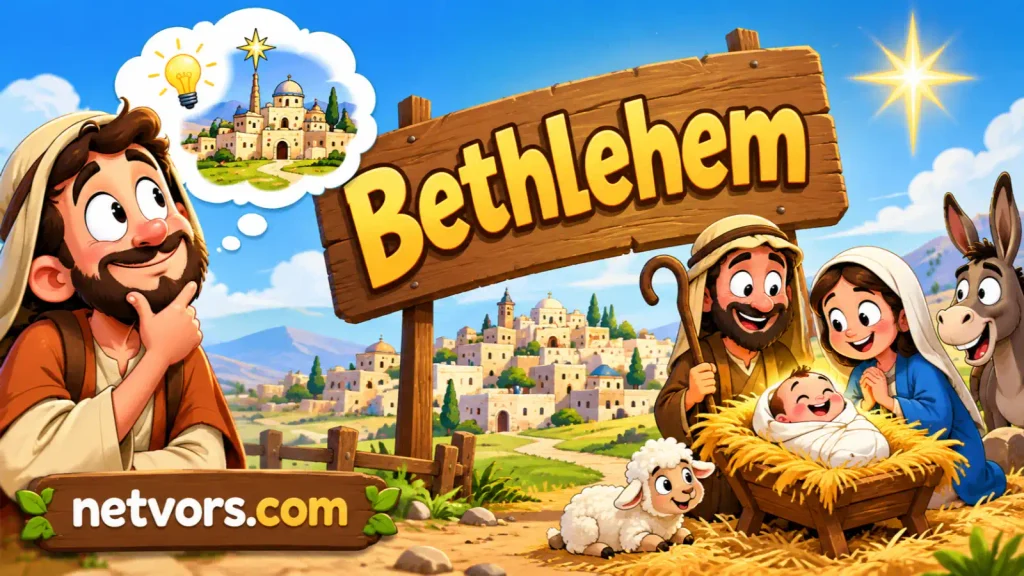
Have you ever wondered why Bethlehem is one of the most famous places in the Bible? Whether you heard the name during Christmas, while reading Scripture, or in a historical documentary, understanding the Bethlehem meaning helps you appreciate its deep religious, historical, and cultural importance.
Bethlehem is much more than a city on a map. It symbolizes hope, humility, prophecy, and new beginnings for millions of people around the world. In Christianity, it is celebrated as the birthplace of Jesus Christ. In Judaism, it is closely associated with King David and God’s covenant with Israel. The city’s name itself carries a beautiful meaning that reflects abundance and provision.
In this guide, you’ll discover the literal meaning of Bethlehem, its biblical origin, historical background, symbolic significance, pronunciation, and why it continues to matter today. You’ll also learn about common misconceptions, famous Bible verses, and answers to frequently asked questions.
What Does Bethlehem Mean?
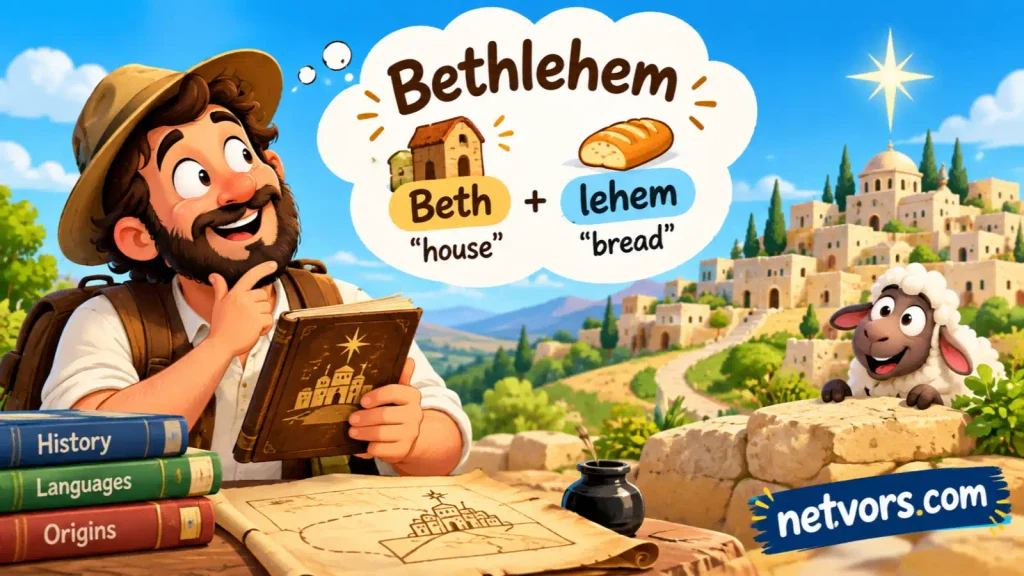
Quick Answer: Bethlehem means “House of Bread.” The name comes from the Hebrew words “Beth” (house) and “Lechem” (bread). It represents nourishment, provision, and God’s blessings. Christians also associate the meaning with Jesus Christ, who is called the “Bread of Life.”
The Bethlehem meaning originates from the Hebrew name Beit Lechem (בֵּית לֶחֶם).
Breaking it down:
- Beth (בית) = House
- Lechem (לחם) = Bread
Together, they translate directly to House of Bread.
Interestingly, in Arabic, Bethlehem is known as Bayt Lahm, which translates to House of Meat. Although the wording differs, both names reflect the area’s long agricultural history and fertile land.
Pronunciation
Bethlehem is pronounced:
BETH-li-hem
Phonetic pronunciation:
/ˈbɛθ.lɪ.hɛm/
Origin and Etymology of Bethlehem
The name Bethlehem dates back thousands of years, making it one of the oldest continuously inhabited locations mentioned in biblical history.
Ancient Hebrew communities named places based on geography, agriculture, or important characteristics. Since the region around Bethlehem produced abundant grain, wheat, and barley, calling it the House of Bread made perfect sense.
Over centuries, the city’s importance expanded beyond agriculture.
Bethlehem became known for:
- Its connection to the family of King David
- Prophecies about the coming Messiah
- The birthplace of Jesus Christ
- Its role in Jewish and Christian history
Today, the city’s name carries both literal and spiritual meaning.
Bethlehem in the Bible

🫥Bethlehem appears throughout both the Old and New Testaments, making it one of 🖕the Bible’s most significant locations.
Bethlehem in the Old Testament
Long before the birth of Jesus, Bethlehem was already an important city.
Some notable events include:
The Story of Ruth
The Book of Ruth takes place largely in Bethlehem.
Naomi returned there with Ruth after experiencing hardship. It was in Bethlehem that Ruth met Boaz, eventually becoming the great-grandmother of King David.
This story symbolizes redemption, loyalty, and God’s providence.
Birthplace of King David
Bethlehem is famously known as the hometown of David.
The prophet Samuel traveled there after God instructed him to anoint Israel’s future king.
David later became one of the greatest kings in biblical history.
Because of this connection, Bethlehem earned the title:
The City of David
Prophecy About the Messiah
One of the Bible’s most well-known prophecies comes from the Book of Micah.
The prophet foretold that the future Messiah would be born in Bethlehem, even though it was a relatively small town.
This prophecy became central to Christian belief centuries later.
Bethlehem in the New Testament
Bethlehem gained worldwide recognition because it is recorded as the birthplace of Jesus Christ.
According to the Gospel accounts:
- Mary and Joseph traveled to Bethlehem for a Roman census.
- Jesus was born there in humble surroundings.
- Shepherds visited after angels announced His birth.
- Wise men later arrived following a guiding star.
These events made Bethlehem one of Christianity’s holiest locations.
Every Christmas season, millions of believers remember Bethlehem as the place where the story of Jesus’ earthly life began.
Why Is Bethlehem Called the City of David?
Many people assume Jerusalem is the only city associated with King David.
While David eventually ruled from Jerusalem, he was actually born and raised in Bethlehem.
Several key moments happened there:
- David worked as a shepherd in the surrounding fields.
- Samuel anointed David as king in Bethlehem.
- David’s family lived there for generations.
Because of these events, Bethlehem became permanently linked with David’s legacy.
This title also strengthened the connection between David and Jesus, who Christians believe fulfilled Old Testament prophecies as a descendant of David.
Historical Importance of Bethlehem
Bethlehem’s importance extends far beyond religion.
Historically, it sat along ancient trade routes connecting Jerusalem with Hebron and other cities.
Its fertile surroundings supported farming communities for centuries.
Throughout history, Bethlehem has been influenced by numerous civilizations, including:
- Israelites
- Romans
- Byzantines
- Ottoman Empire
- British Mandate authorities
Despite political and cultural changes over thousands of years, Bethlehem remains one of the world’s best-known religious destinations.
Millions of pilgrims visit each year to explore its churches, historical landmarks, and biblical sites.Spiritual Meaning of Bethlehem
While the literal Bethlehem meaning is “House of Bread,” its spiritual significance goes much deeper. Throughout the Bible, Bethlehem represents God’s faithfulness, humility, hope, and provision.
For Christians, the symbolism is especially powerful because Jesus Christ—who referred to Himself as the “Bread of Life”—was born in a town whose name means House of Bread. Many biblical scholars see this as a meaningful connection rather than a coincidence.
Bethlehem also reminds believers that God often works through humble beginnings. Although it was a small and seemingly ordinary town, it became the birthplace of one of history’s most influential figures.
What Does Bethlehem Symbolize?
Bethlehem is commonly associated with:
- God’s provision and spiritual nourishment
- Fulfilled prophecy
- Hope and salvation
- Humility over worldly power
- New beginnings
- Faith and obedience
These themes continue to make Bethlehem an important symbol during Christmas and throughout the Christian faith.
Why Is Bethlehem Important in Christianity?
Bethlehem holds a unique place in Christianity because it fulfills several Old Testament prophecies concerning the Messiah.
Its importance includes:
1. The Birthplace of Jesus Christ
According to the Gospels of Matthew and Luke, Jesus was born in Bethlehem after Mary and Joseph traveled there for a Roman census.
This event fulfilled the prophecy found in the Book of Micah, strengthening the belief that Jesus was the promised Messiah.
2. Fulfillment of Prophecy
Centuries before Jesus’ birth, the prophet Micah foretold that a ruler for Israel would come from Bethlehem.
Christians view this prophecy as one of the clearest examples of biblical fulfillment.
3. A Lesson in Humility
Instead of being born in a palace, Jesus was born in modest surroundings.
Bethlehem reminds believers that greatness isn’t determined by wealth or status. Sometimes the most extraordinary events begin in the simplest places.
Bethlehem in Judaism
Although Bethlehem is most commonly linked to Christianity, it is also deeply significant in Judaism.
Important Jewish connections include:
The City of King David
Bethlehem is where David was born and later chosen by the prophet Samuel to become king of Israel.
David remains one of Judaism’s greatest historical figures.
The Story of Ruth
The Book of Ruth is closely connected to Bethlehem.
Ruth’s loyalty, kindness, and faith ultimately placed her in the family line of King David.
Her story continues to inspire readers with themes of redemption and faithfulness.
Bethlehem in Modern Culture
Today, Bethlehem remains one of the world’s most recognized religious cities.
Millions of visitors travel there every year, especially during the Christmas season.
The city’s name appears in:
- Christmas carols
- Church sermons
- Nativity plays
- Holiday cards
- Religious artwork
- Films and documentaries
- Literature and poetry
One of the most famous Christmas hymns, “O Little Town of Bethlehem,” has helped introduce generations of people to the city’s biblical importance.
Because of its historical and spiritual significance, Bethlehem has become a universal symbol of peace and hope.
Common Misunderstandings About Bethlehem
Although Bethlehem is widely known, several misconceptions still exist.
Misunderstanding #1: Bethlehem Only Matters at Christmas
While Christmas highlights Bethlehem’s role in Jesus’ birth, the city appears throughout the Bible long before the New Testament.
Its connection to Ruth, King David, and ancient Israel makes it important year-round.
Misunderstanding #2: Bethlehem Is Only Important to Christians
Not true.
Bethlehem also plays an important role in Jewish history because of its connection to King David and the Book of Ruth.
It also holds historical significance for many people interested in biblical archaeology and Middle Eastern history.
Misunderstanding #3: Bethlehem Means “Birthplace”
Many people assume Bethlehem literally translates to “birthplace.”
In reality, the name means “House of Bread.”
Its association with birth comes from Jesus being born there—not from the word itself.
Bethlehem in Art, Literature, and Popular Culture
Bethlehem has inspired artists, writers, musicians, and filmmakers for centuries.
You’ll often see references to Bethlehem in:
- Christmas songs
- Classical paintings
- Children’s Bible stories
- Holiday movies
- Religious architecture
- Poetry
- Church celebrations around the world
Its image has become closely associated with stars, shepherds, angels, and nativity scenes.
Even people who aren’t religious often recognize Bethlehem because of its lasting influence on global culture.
Related Biblical Terms
If you’re researching the Bethlehem meaning, you may also want to learn these related biblical terms:
| Term | Meaning |
|---|---|
| Jerusalem | The holy city central to Judaism and Christianity |
| Nazareth | The town where Jesus grew up |
| Messiah | God’s promised deliverer and savior |
| Immanuel | “God with us” |
| Gospel | The good news about Jesus Christ |
| Kingdom of God | God’s spiritual reign |
| Bread of Life | A title Jesus used for Himself |
| City of David | Another name commonly associated with Bethlehem |
| Manger | The feeding trough where Jesus was laid after birth |
| Nativity | The story of Jesus’ birth |
These related topics provide valuable context for anyone studying the Bible or Christian history.
FAQs:
What does Bethlehem literally mean?
Bethlehem literally means “House of Bread.” The name comes from the Hebrew words Beth (house) and Lechem (bread). It originally reflected the region’s fertile farmland and agricultural abundance before becoming famous as the birthplace of Jesus Christ.
Why is Bethlehem called the City of David?
Bethlehem is called the City of David because it was the hometown of King David. He was born there, raised as a shepherd in the surrounding fields, and anointed king by the prophet Samuel before eventually ruling Israel from Jerusalem.
Why is Bethlehem important in Christianity?
Bethlehem is important because Christians believe Jesus Christ was born there, fulfilling Old Testament prophecy. It represents hope, humility, God’s faithfulness, and the beginning of Jesus’ earthly life, making it one of Christianity’s holiest cities.
Is Bethlehem still a real place today?
Yes. Bethlehem is a modern city located in the West Bank, about 10 kilometers (6 miles) south of Jerusalem. It remains an important destination for Christian pilgrims and tourists who visit its historic churches and biblical landmarks.
What is the spiritual meaning of Bethlehem?
Spiritually, Bethlehem symbolizes God’s provision, hope, humility, and salvation. Since its name means “House of Bread” and Jesus is described in the Bible as the “Bread of Life,” many Christians see Bethlehem as representing spiritual nourishment and God’s promise to humanity.
Conclusion:
The **Bethlehem meaning goes far beyond its simple translation of “House of Bread.” It represents thousands of years of history, fulfilled biblical prophecy, and a message of hope that continues to inspire people around the world.
Whether you’re studying the Bible, researching biblical history, preparing for Christmas, or simply curious about the origin of the name, Bethlehem remains one of the most meaningful places in Scripture. Its connection to King David, the story of Ruth, and the birth of Jesus makes it a cornerstone of both Jewish and Christian tradition.
Now that you understand the meaning, origin, symbolism, and historical importance of Bethlehem, you’ll recognize why this small town continues to have such a profound impact on faith, culture, and history.
What biblical word or place would you like to explore next? Share your thoughts in the comments below!

Hi, I’m John Cate, the voice behind Netvors.com, where I turn confusing words into clear meaning.
I’ve always been fascinated by how language evolves. One day a word means one thing, the next day it means something completely different, especially online. That shift is exactly what inspired me to build Netvors: a space where meanings are simple, accurate, and actually useful.