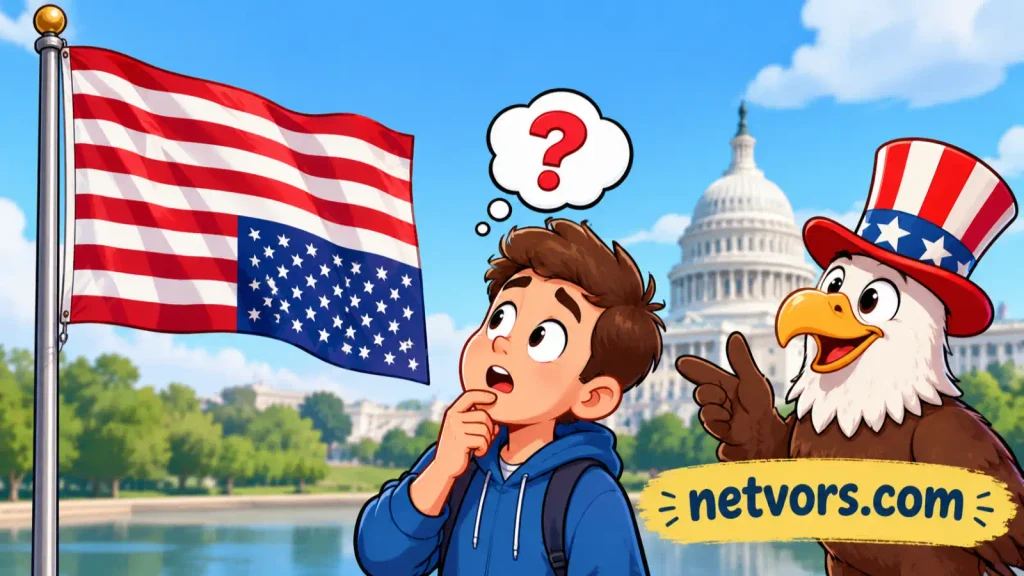
Have you ever seen an American flag hanging upside down outside a house, on a protest sign, or in a social media post and wondered what it means? It might look like a simple mistake, but this unusual display often carries a serious message.
The American flag upside down meaning is most closely associated with distress, danger, and a belief that something is seriously wrong. Traditionally, an inverted U.S. flag signals extreme danger to life or property. In modern American culture, however, it is also used to express political disagreement, public frustration, or concern about the direction of the country.
The tricky part is that the symbol does not communicate exactly the same message in every situation. A flag displayed during an emergency may have a different purpose from one carried at a political rally or shared with an angry caption online.
In this guide, you’ll learn what an upside down American flag symbolizes, where the tradition originated, how Americans use it today, and what its display means under U.S. flag guidelines. You’ll also find real-world examples, common misconceptions, and answers to frequently asked questions.
Last updated: October 2026.
What Does the American Flag Upside Down Mean?
The American flag displayed upside down generally represents distress or a serious crisis. According to Section 8(a) of the U.S. Flag Code, the flag should not be displayed with its union—the blue field containing white stars—down except as a signal of dire distress in instances of extreme danger to life or property.
Today, the inverted American flag is also a recognizable form of political protest. Someone displaying it may believe that the government, the political system, or the country as a whole is failing to uphold important American principles.
Quick answer
An upside down American flag symbolizes distress, danger, or protest. Traditionally, it signals extreme danger to life or property. In contemporary use, it often expresses dissatisfaction with political decisions, government actions, or the state of the nation. The surrounding circumstances help explain which meaning is intended.
What does an inverted American flag look like?
A standard American flag has a blue rectangle filled with white stars in its upper-left corner when viewed in its usual horizontal display. When the flag is turned upside down, that blue field appears in the lower-left corner instead.
The reversal is intentional in some cases, but not every inverted flag is a deliberate statement. Wind, an incorrectly installed flag, or a simple mounting error can also explain what you see.
Where did the upside down flag tradition begin?
The use of an inverted flag as a distress signal has historical roots in maritime traditions. Sailors needed a way to communicate that a vessel was in trouble, especially when ordinary communication was difficult or unavailable.
Turning a national flag upside down offered a visible way to indicate distress using a flag already on board. The practice later became part of the symbolism associated with the American flag. The U.S. Flag Code, first developed in the twentieth century, formalized guidance about displaying the flag with its union down.
Over time, the meaning expanded beyond physical emergencies. Activists began using the inverted flag to suggest that the nation itself was in a state of crisis.
Why Do People Fly the American Flag Upside Down?
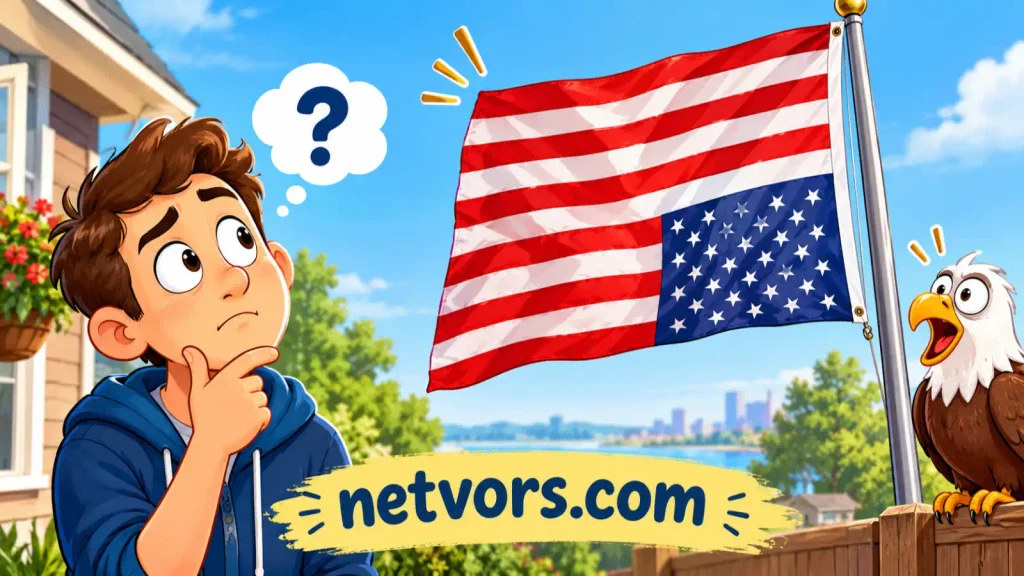
There are several reasons someone might display an upside down American flag. Understanding the context is more useful than assuming everyone who uses it has the same message.
1. To signal distress or danger
The traditional meaning is a signal of serious distress. The Flag Code specifically refers to extreme danger to life or property, rather than everyday frustration or inconvenience.
For example, imagine a remote property damaged by a severe storm. A person might display an inverted flag to communicate that they are in serious trouble.
However, an upside down flag is not a substitute for contacting emergency services when those services are available. Nor should anyone assume that every inverted flag is an active distress call.
2. To protest government actions
Some Americans turn the flag upside down to show that they believe the government is acting against the country’s values or interests.
Their concerns might involve elections, public policy, civil liberties, or political leadership. The exact message depends on the person displaying the flag and the circumstances.
For example, someone might post an upside down flag after a controversial government decision. The intended message could be, “I believe our country is heading in the wrong direction.”
3. To express frustration with the state of the nation
The symbol can communicate a broader sense of national disappointment. Rather than criticizing one particular politician or policy, the person may be expressing concern about the country’s overall condition.
This is one reason the symbol can provoke strong reactions. For some viewers, it represents a call to confront national problems. For others, it appears disrespectful toward a symbol associated with service, sacrifice, and national identity.
4. To make a statement on social media
An inverted American flag can also appear in memes, profile pictures, posts, and protest-related discussions.
A person might share it to show anger, draw attention to a news event, or signal agreement with a political movement. A caption, hashtag, or accompanying image can provide clues about the intended message.
Still, a single image does not tell the whole story. Before deciding what someone means, consider the original post, its source, and the surrounding discussion.
Is Flying the American Flag Upside Down a Form of Protest?
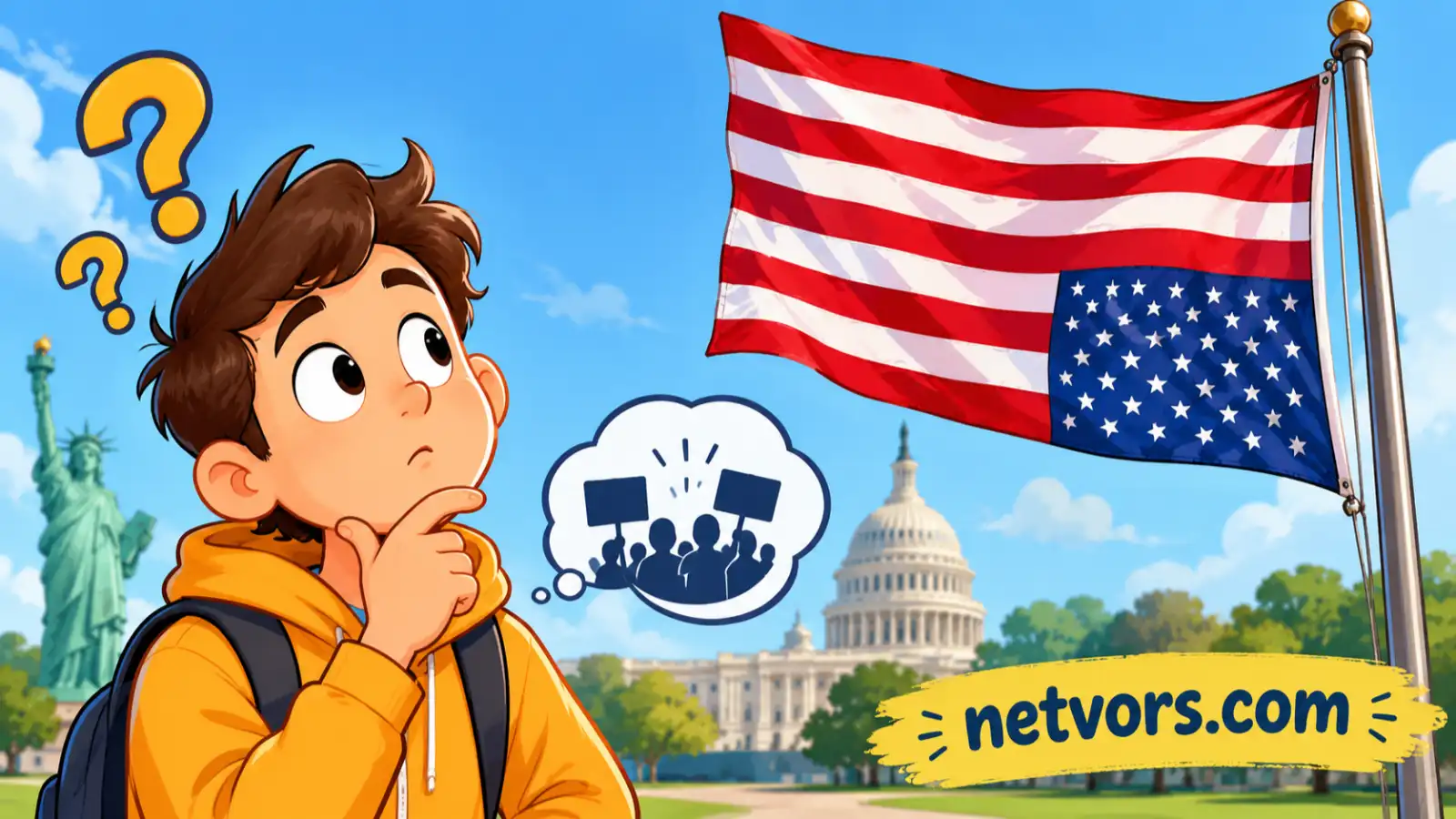
Yes. In modern American culture, flying the flag upside down is an established form of symbolic political protest.
The idea is straightforward: if the inverted flag traditionally signals distress, turning it upside down can suggest that the country itself is in trouble.
This form of protest has appeared across different political movements. In 1854, an inverted U.S. flag was displayed at an anti-slavery rally in Massachusetts. During the Vietnam War era, antiwar activists also used the symbol to express opposition to government policy and military action.
The practice is not exclusive to one political party. Different groups have used it to express different concerns, even when their political views strongly disagree.
A modern example: political protests and election disputes
In 2021, inverted American flags appeared in protests disputing the 2020 presidential election results. In June 2024, the symbol received renewed national attention when supporters of Donald Trump used it to protest his criminal conviction in New York. News coverage documented how the flag had become associated with some right-wing protest movements, while also noting its broader history as a symbol used across the political spectrum.
These examples demonstrate why the meaning can change with the circumstances. The same visual symbol can represent a general sense of national crisis, opposition to a particular political decision, or support for a specific movement.
The important distinction: the inverted flag communicates that the person displaying it perceives a serious problem. It does not, by itself, tell you exactly what that problem is.
What Does the U.S. Flag Code Say About an Upside Down Flag?
The U.S. Flag Code provides the main reference for understanding the traditional meaning of an inverted American flag.
Section 8(a) of Title 4 of the United States Code states that the flag should never be displayed with its union down, except as a signal of dire distress in instances of extreme danger to life or property.
This guidance explains why the inverted display is associated with emergencies rather than ordinary inconvenience.
Is it illegal to fly the American flag upside down?
The answer requires a distinction between flag etiquette and enforceable law.
The Flag Code sets out recognized standards for respectful flag display, but its guidance does not automatically create a criminal penalty for every violation. The code’s language should not be confused with a blanket prohibition that makes every upside down display a crime. Particular circumstances and other applicable laws can matter.
The First Amendment also protects many forms of expressive conduct. In Spence v. Washington (1974), the U.S. Supreme Court ruled in favor of a student who had displayed an inverted American flag bearing a peace symbol as a political protest. The Court held that the state’s application of its law impermissibly infringed protected expression.
Justia U.S. Supreme Court Center
This case does not mean every possible flag-related action is immune from every law. It illustrates that political expression involving the flag can receive constitutional protection.
For a specific legal dispute, consult a qualified attorney or an authoritative legal source.
How to Interpret an Upside Down American Flag in Different Situations
The surrounding circumstances often provide the clearest clues to the intended meaning.
| Situation | Possible meaning | What to consider |
|---|---|---|
| Displayed during a genuine emergency | Distress or danger | Is there evidence of an urgent situation? |
| Carried at a political rally | Protest or political dissatisfaction | What issue is the rally addressing? |
| Hung outside a private home | Personal political statement, distress, or an error | Are there other signs of an intentional message? |
| Shared on Instagram or X | Political commentary, anger, or solidarity | What do the caption and original post say? |
| Used in a meme | Humor, satire, criticism, or exaggeration | Is the post intended to be serious or ironic? |
| Seen on a building or public property | Protest, a display error, or another specific message | Who put it there, and in what context? |
These are possible interpretations, not guaranteed meanings. The flag itself does not identify the person’s motives.
What does an upside down American flag mean on social media?
Online, the symbol is often used to communicate a political opinion quickly. Someone may share an inverted flag instead of writing a long explanation of why they are upset.
On platforms such as Instagram, Reddit, Discord, and X, the surrounding words, hashtags, and replies may clarify the message. For example, a flag posted alongside criticism of a new law probably has a different intended meaning from one posted alongside an emergency appeal.
There is no universal social media definition or special internet slang meaning that applies to every post. Context matters more than the platform itself.
What if the flag is upside down by accident?
Not every inverted flag is a political statement or distress signal.
A flag may be attached incorrectly, installed in a hurry, or mounted by someone unfamiliar with proper flag orientation. If there are no other clues, it is better to avoid assuming the display was intentional.
A quick mistake does not automatically reveal someone’s political beliefs or feelings about the United States.
Common Mistakes and Misunderstandings
The upside down American flag attracts attention, but several common assumptions can lead to misunderstandings.
Mistake 1: Assuming it always means an emergency
The traditional Flag Code meaning involves dire distress and extreme danger to life or property. However, many contemporary displays are political statements rather than emergency signals.
Better approach: Look at the location, timing, and circumstances before interpreting the flag.
Mistake 2: Assuming it always represents one political party
Although the inverted flag has become associated with particular political movements during recent events, people with different political views have used it to express dissent.
Better approach: Identify the issue being protested instead of automatically assigning a political identity to the person displaying it.
Mistake 3: Assuming it automatically proves disrespect for America
Some people consider an inverted flag disrespectful because of traditional flag etiquette. Others deliberately use it because they believe they are defending American ideals by protesting what they see as a national crisis.
Better approach: Distinguish between the symbol’s traditional display guidelines and the message someone intends to communicate.
Do younger and older Americans interpret it differently?
They can, but age alone does not determine how someone understands the symbol.
Someone familiar with the Flag Code may immediately associate an inverted flag with distress. Another person who mainly encounters it through political posts may first think of protests or election-related disputes.
Family background, political experience, education, and exposure to news can all influence interpretation. It is more accurate to consider those factors than to assume that every generation has a single shared understanding.
How can you clarify the meaning?
If someone displays an inverted flag and you are unsure why, consider asking a neutral question such as, “What message are you trying to communicate with the flag?”
That approach is more useful than starting an argument based on an assumption. It also recognizes that the same symbol can carry different meanings for different people.
Related Symbols, Terms, and Alternatives
The upside down American flag belongs to a broader world of visual symbols used to communicate distress, protest, patriotism, or disagreement.
These related terms can help you understand discussions about flags and political expression.
| Symbol or term | Meaning |
|---|---|
| U.S. Flag Code | Federal guidelines describing customary practices for displaying and respecting the American flag. |
| Distress signal | A signal indicating that someone or something is in serious danger and needs assistance. |
| Inverted flag | A flag displayed upside down from its normal orientation. |
| Political protest | An action intended to express opposition to a government, policy, decision, or social condition. |
| Symbolic speech | Conduct or visual expression used to communicate an idea or viewpoint. |
| First Amendment | A constitutional provision protecting freedoms that include speech, religion, press, assembly, and petition. |
| Flag etiquette | Customs and guidelines concerning the respectful display and handling of a flag. |
| Patriotism | Love of or commitment to one’s country; people may disagree about how best to express it. |
| Civil disobedience | Deliberate, often public refusal to obey a law or policy as a form of protest. |
| National symbolism | The use of flags, emblems, colors, or other symbols to represent a nation and its identity. |
Is there a synonym for an upside down American flag?
Terms such as inverted American flag, upside down U.S. flag, and American flag displayed with its union down describe essentially the same physical arrangement.
However, these phrases are not exact synonyms for the flag’s meaning. An inverted flag can signal distress or serve as a protest symbol, while the word protest describes one possible purpose rather than the physical display itself.
There is also no single antonym for an upside down American flag. A flag displayed in its customary orientation is the clearest contrast, although its normal position does not automatically communicate a particular political belief.
FAQs:
1. What does an upside down American flag mean?
An upside down American flag traditionally signals dire distress involving extreme danger to life or property. In contemporary use, it is also a symbol of political protest or dissatisfaction with the nation’s condition. Its precise meaning depends on the circumstances, the person displaying it, and any accompanying message.
2. Is it disrespectful to fly the American flag upside down?
Many people regard it as disrespectful because the U.S. Flag Code says the flag should not be displayed with its union down except as a signal of dire distress in extreme danger. Others use the inverted flag deliberately to protest what they believe is a failure to uphold American values. Reactions therefore vary.
3. Is flying the American flag upside down illegal?
The U.S. Flag Code provides guidance on proper display but does not itself impose a general criminal penalty for every violation. Political flag displays may also be protected expression under the First Amendment. However, the legality of a specific act can depend on other applicable laws and circumstances.
4. Does an upside down American flag mean the country is in danger?
It can express that belief. In political contexts, people may use the inverted flag to argue that American institutions, rights, or national values are under threat. The traditional meaning is more specific: dire distress in instances of extreme danger to life or property. The flag alone cannot establish whether a danger is real or immediate.
5. What does an upside down American flag mean on social media?
On social media, an inverted U.S. flag often represents political anger, protest, or concern about current events. Its intended message may become clearer through the caption, hashtags, comments, or related images. It can also appear in satire or memes. There is no universal online meaning that applies to every post.
6. When did Americans start using upside down flags as a protest symbol?
The practice has a long history. An inverted American flag appeared at an anti-slavery rally in Massachusetts in 1854. The symbol was also used by antiwar activists during the Vietnam War era and has appeared in later political protests. Its meaning has evolved as different movements have adopted it to express national distress or opposition.
7. What is the correct way to display the American flag?
In a normal horizontal display, the blue union with white stars belongs in the upper-left corner from the observer’s perspective. In a vertical display against a wall, the union should be at the top and to the observer’s left. The U.S. Flag Code provides additional guidance on flag position, handling, and respectful display.
8. Does an upside down flag always mean someone is protesting?
No. It may be used as a distress signal, displayed intentionally as a political statement, or installed upside down by mistake. A person might also use it in a meme or another form of commentary. Without further context, you cannot reliably determine the person’s intention from the flag alone.
9. What does an upside down American flag mean during a protest?
During a protest, the inverted flag usually communicates that the person or group believes something is seriously wrong with the nation or its leadership. It can express opposition to government policies, political decisions, or perceived threats to American principles. The exact message depends on the cause being supported or challenged.
10. Is the upside down American flag a symbol of patriotism or anti-American sentiment?
It can be interpreted in either way, depending on the person displaying it and the viewer’s perspective. Some protesters use it because they believe they are defending the country’s founding ideals. Others see the inverted display as disrespectful toward the nation and its flag. The symbol does not, by itself, settle that disagreement.
Conclusion:
The American flag upside down meaning comes down to three closely related ideas: distress, danger, and protest. Its traditional meaning under the U.S. Flag Code is a signal of dire distress in extreme danger to life or property.
In modern America, the inverted flag is also used to express political frustration, challenge government actions, and draw attention to perceived national problems. Its interpretation depends on the historical, political, and personal context surrounding the display.
The next time you see an upside down American flag, look beyond its orientation. Ask where it appears, what is happening, and what message the person displaying it may be trying to send. Understanding the context is the best way to interpret this powerful and often controversial symbol.
Want to learn more about the meaning behind everyday symbols? Explore our related guides on flags, national symbols, and popular expressions, and share your thoughts in the comments.

Hi, I’m John Cate, the voice behind Netvors.com, where I turn confusing words into clear meaning.
I’ve always been fascinated by how language evolves. One day a word means one thing, the next day it means something completely different, especially online. That shift is exactly what inspired me to build Netvors: a space where meanings are simple, accurate, and actually useful.